

Patience vs Solitaire: A Complete Guide to Both Terms

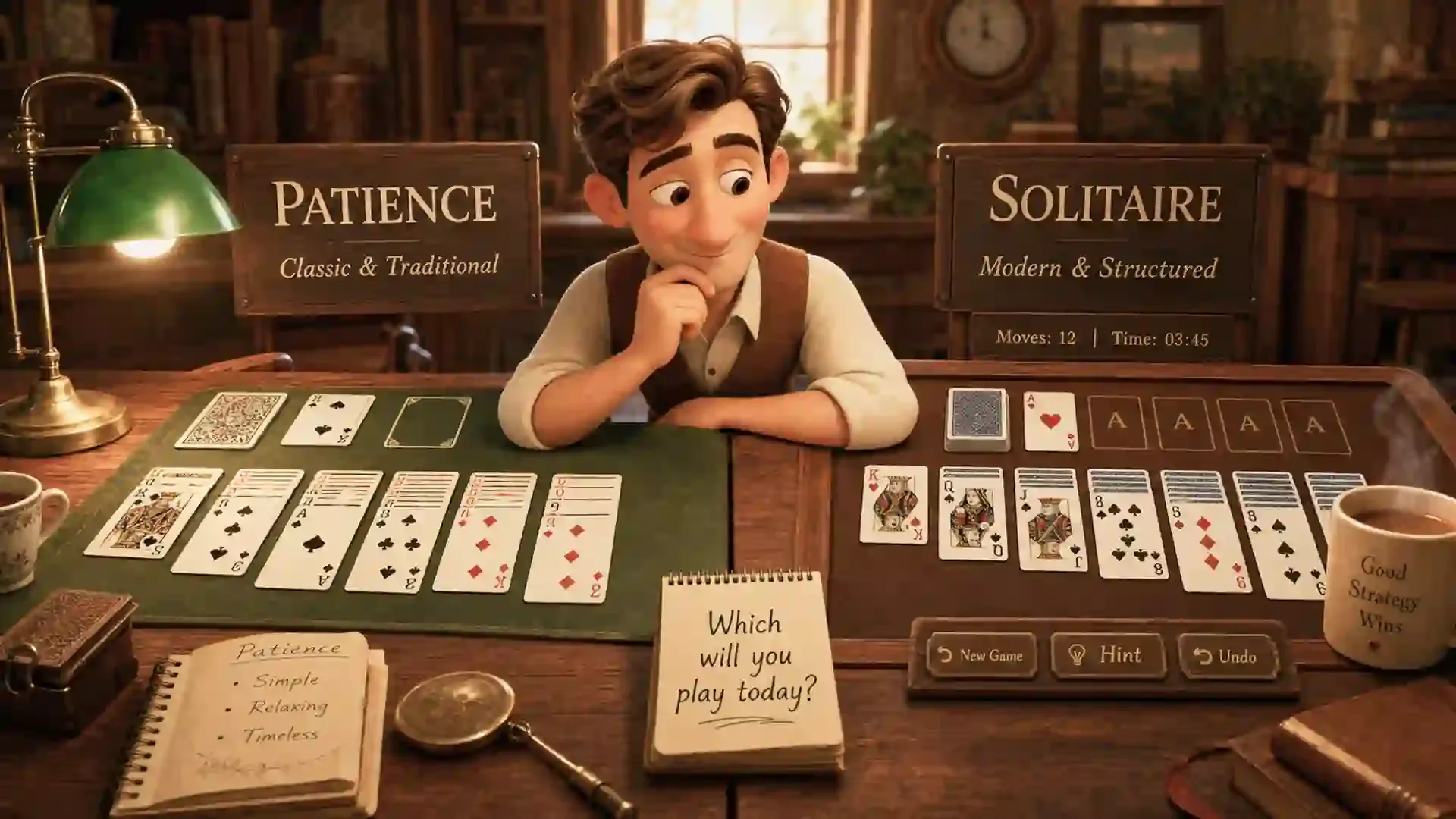
If you want to play online solitaire, you have probably seen the word "Patience" used in place of "Solitaire" in some places. There is no gameplay difference but what is “Patience”. These are two names for the exact same type of single-player card game “ Solitaire”. The only difference is regional. People in North America say Solitaire. People in Britain and Europe say Patience.
When you look into patience vs solitaire, you are really looking at a language difference, not a rule difference. Let’s read about it.
Table of contents
What Is Solitaire?
Solitaire card game is the one with seven columns that Microsoft put into Windows back in the 1990s. But Solitaire is actually a whole family of games. It includes Spider, FreeCell, Pyramid, and TriPeaks.
Here is how the basic game works. You shuffle a standard 52-card deck. You deal cards into a tableau. That is usually seven columns, with more cards in each column as you go right. The top card of each column stays face up. The rest of the deck goes into a pile called the stock. You flip cards from the stock to another pile called the waste. Your goal is to move every card to four foundation piles, sorted by suit from Ace up to King.
Knowing how to set everything up is just the first step. Learning to play well takes a bit more. Good players think ahead. One useful rule: empty a tableau column as soon as you can. An empty column accepts only a King. But once you place a King there, you can move longer sequences around the board. This single tactic improves win rates noticeably.
A common question among newer players is every Solitaire game winnable. The answer is No. Even with perfect play, some Klondike deals cannot be solved. Research suggests roughly 80 percent of Klondike games are winnable in theory.
For those seeking a real challenge, Klondike Solitaire Turn 3 is worth your time. This variant is harder, slower, and more rewarding.
Strong players recognize when a game is already lost and restart early. They avoid moving cards just to move them. They understand that luck matters, but good decisions improve the odds.
The benefits of Solitaire include low barriers to entry. You need only a deck or a phone. No opponents. No time limits. You can stop anytime. You can play while waiting for a meeting or riding a train.
What Is Patience?
Patience is the exact same category of games under a different name. The term dominates in the United Kingdom, Europe, and Commonwealth countries. The name comes from what the game requires. You must sit quietly, consider each move deliberately, and wait for favorable sequences to emerge.
During the Victorian era, Patience was considered a proper pastime for the upper classes.
When you compare solitaire vs freecell, the games themselves differ, but when you compare solitaire vs patience, the Victorian connection is the only meaningful distinction. The British named the activity after a virtue. Americans later renamed it after the solitude of playing alone.
Key Differences Between Patience and Solitaire
| Feature | Solitaire | Patience |
|---|---|---|
| Meaning | Single-player card game | Same as Solitaire |
| Usage Region | USA, global digital | Europe, UK |
| Popularity | More common online | Traditional term |
| Gameplay | Same rules | Same rules |
The discussion of solitaire vs patience really comes down to players in the US and UK.
Why Are There Two Names for the Same Game?
The two names exist because of a four-stage historical process.
First stage: France, early 1800s. Someone invented a single-player card game and called it "Success." That name did not last.
Second stage: The game crossed the English Channel to Britain. The British renamed it Patience because that is what the game demanded. This name stuck for about a hundred years.
Third stage: The game crossed the Atlantic to America. Americans adopted the term Solitaire from the French word for "alone." The exact reason is not documented. Some believe Americans found "Patience" too formal.
Fourth stage: 1990. Microsoft included Solitaire in Windows 3.0 for free. Every personal computer running Windows suddenly had a Solitaire button. The American name became the global standard almost overnight.
This sequence explains the entire confusion. If a British software company had dominated the market in the 1990s, you would be calling it Patience today. You may also read about Solitaire history.
Are Patience and Solitaire Always the Same?
In practice, yes. Two narrow exceptions exist.
- First, some antique European rulebooks define Patience strictly as games where foundation building begins immediately, without tableau manipulation.
- Second, the term Solitaire sometimes refers to Peg Solitaire, a wooden board game with pegs or marbles that involves no cards.
For player purposes, these exceptions do not matter. You are playing card games, not board games. You are consulting contemporary sources, not rulebooks from the 1880s. The question of patience vs solitaire is settled for practical play.
What genuinely matters is knowing the rules of your chosen variant. Spider Solitaire rules remain consistent regardless of the name. Pyramid Solitaire rules do not vary by region. Moreover, Golf Solitaire rules function identically everywhere. Forty Thieves Solitaire rules are the same whether you call it Forty Thieves Patience or Forty Thieves Solitaire.
Popular Types of Solitaire (Also Called Patience)
These variants are the most widely played. Use whichever term you prefer.
Klondike. The classic seven-column variant. This game is good for beginners. Mastering Klondike Solitaire tips such as prioritizing empty columns and revealing stock cards early will improve your win rate.
Spider Solitaire has 2 decks, 10 columns. Significantly harder than Klondike. To succeed, learn through systematic practice.
Pyramid Solitaire. You have to match cards that sum to 13. The Pyramid Solitaire setup arranges cards in a pyramid with seven rows.
TriPeaks Solitaire. Fast-paced card chaining. Review the TriPeaks Solitaire Rules to maximize your scores.
Golf Solitaire. Simple rules. Unforgiving gameplay. You remove cards that are one rank higher or lower than the waste pile.
Forty Thieves Solitaire Rules. Advanced difficulty. Uses two decks and ten tableau columns. Not recommended for new players.
FreeCell. Every game is winnable. Luck is not a factor. This variant tests pure skill. You can always play online Freecell to get in depth experience.
The debate over solitaire vs patience becomes irrelevant once you play these games.
Which Term Should You Use?
Here is practical guidance based on current professional and digital standards.
Use Solitaire in almost every context. This includes online content, mobile applications, conversations with North Americans, written articles, and searches for the best Solitaire app. If you want the best spider solitaire apps, search for Spider Solitaire, not Spider Patience.
Use Patience only in three specific situations.
- First, you are buying physical cards from a British retailer.
- Second, you are reading a historical rulebook.
- Third, you intentionally want to sound old-fashioned.
Why "Solitaire" Is More Popular Today
Two factors explain the dominance of Solitaire.
First, Microsoft Windows. In 1990, Microsoft included Solitaire in Windows 3.0 at no cost. Every office worker played it. Every child learned the name. That was the turning point.
Second, Mahjong Solitaire explained videos and tile-matching games that borrowed the "Solitaire" brand. No one says "Mahjong Patience." That would sound strange. The name spread further.
The final blow to patience vs solitaire came from mobile app stores. Every major platform lists "Solitaire" as a category. "Patience" appears rarely, if ever.
Final Thoughts
The matter is straightforward. France invented the game. Britain named it Patience. America renamed it Solitaire. Microsoft Solitaire spread the American name worldwide.
The question of patience vs solitaire has a clear answer. The terms are interchangeable. Use Solitaire for digital audiences. Use Patience only for traditional or British contexts.
Focus your energy on improving your skills. Learn Klondike Solitaire Tips. Master how to win spider solitaire. Develop a solid Solitaire Strategy. The meaningful question is not the name. It is whether you can win without relying on the undo button.
FAQs
- Yes. Both terms describe identical single-player card games.
- Victorian England adopted the name Patience because the game required that quality from players.
- Solitaire is substantially more common, primarily due to Microsoft Windows and mobile app stores.
- Card game variants generally are. Peg Solitaire, a board game, is not. For standard card games, the terms are interchangeable.

Benefits of Solitaire: Boost Your Mind and Focus Today
Discover the benefits of Solitaire for brain health, focus, memory, and stress relief. Learn how this classic card game sharpens thinking and boosts mental clarity.

Is Every Solitaire Game Winnable? Discover the Truth Today
Uncover the history of Solitaire and trace its evolution from early card traditions to the iconic game enjoyed by millions today.
13 Types of Solitaire Games: The Ultimate Guide (With Rules, Variations & Tips)
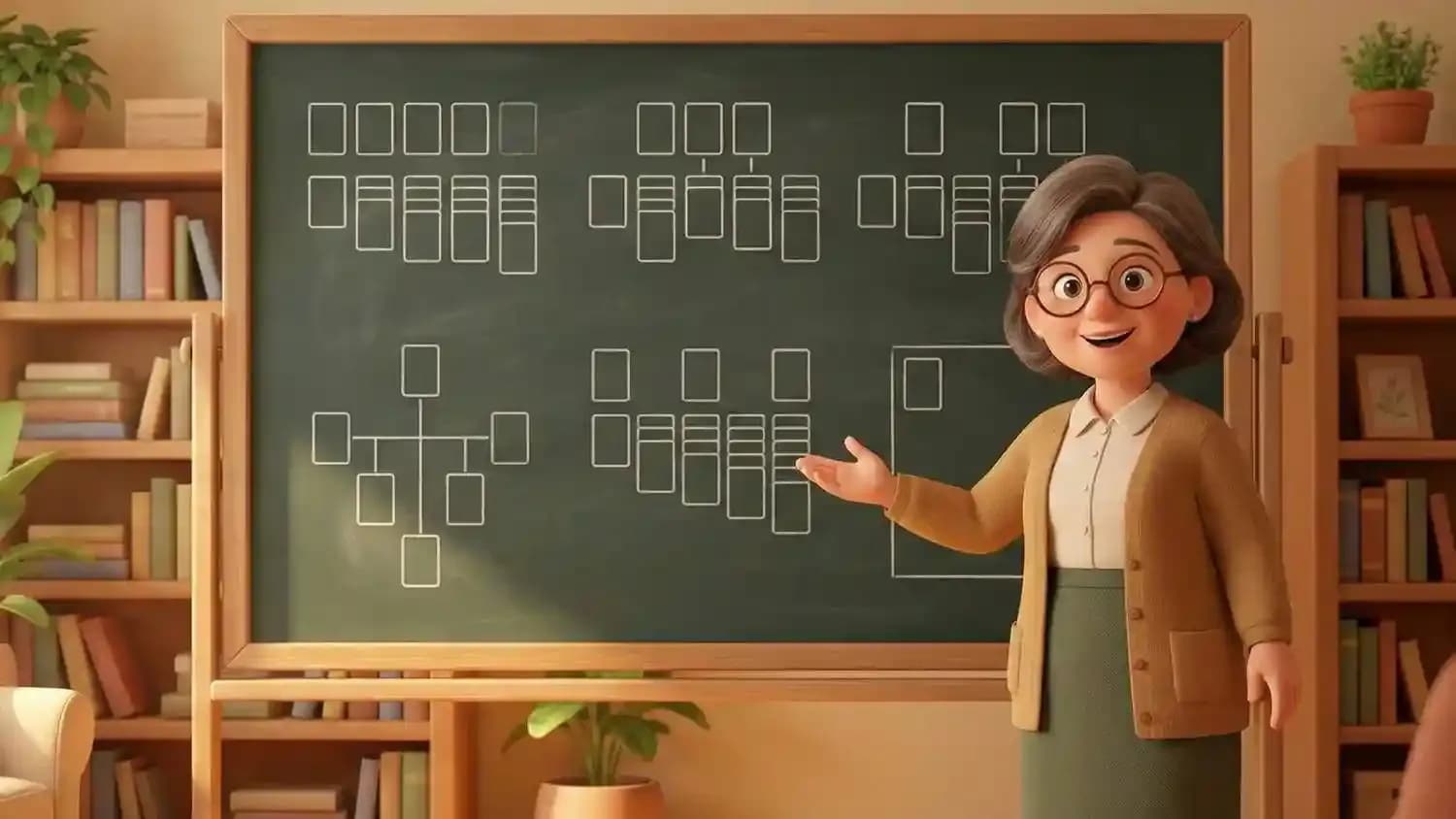
Explore the different types of Solitaire games including Klondike, Spider, FreeCell, Pyramid, and more. Compare rules and find the version you enjoy most.

Word Hurdle Solitaire Game: Rules Explained
Word Hurdle Solitaire is an exciting card-based game that tests your word-building skills. This guide covers the complete rules, differences from other games, scoring system, and tips for beginners.
Spider Solitaire Rules: How to Play, Set Up & Win (Complete Guide)
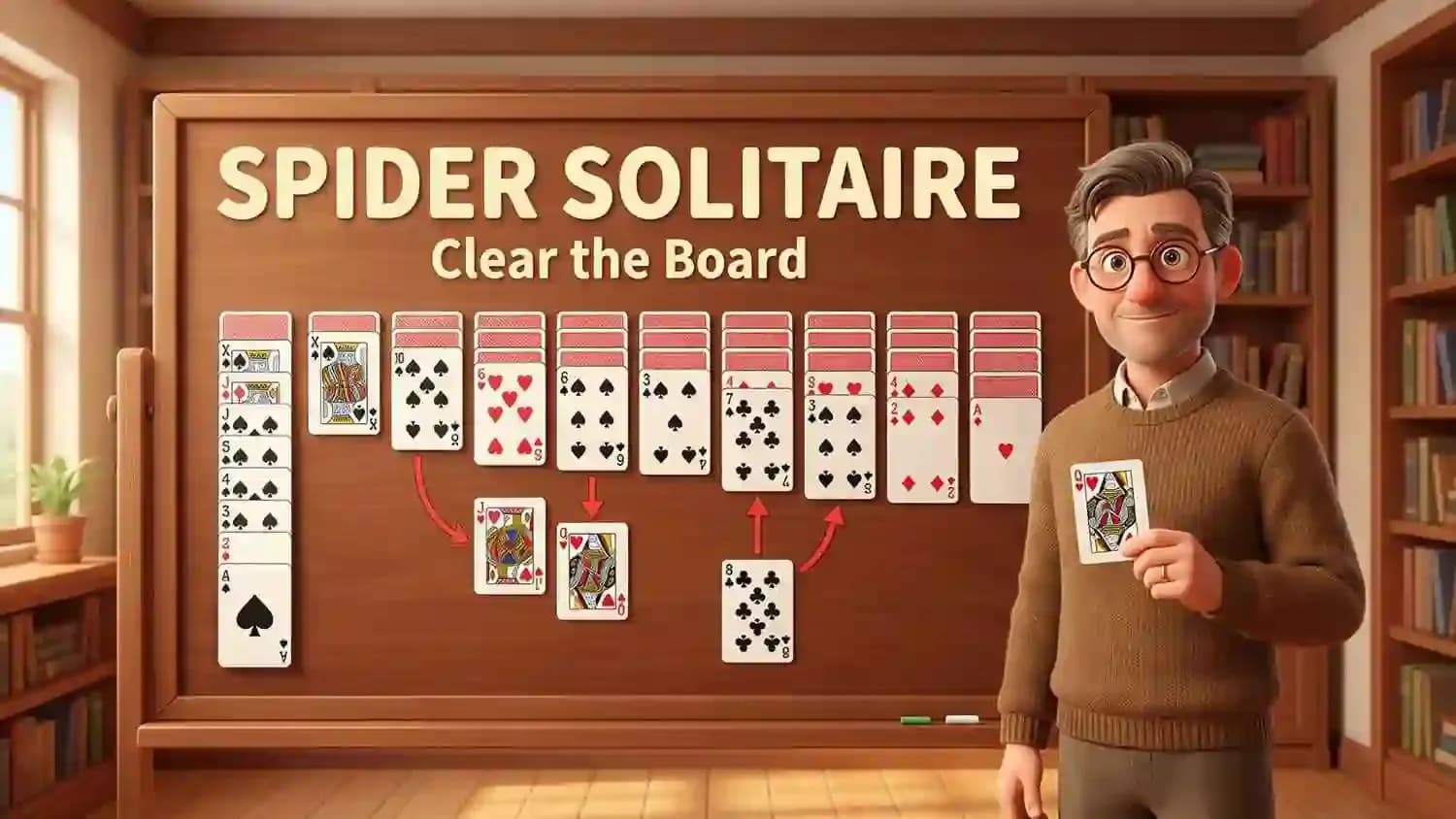
How to play Spider Solitaire made easy—learn the rules, card setup, and proven strategies to improve your skills. Play smarter and win more games now!


