


Mahjong Solitaire Explained: From Relaxing Pastime to Brain-Teasing Challenge

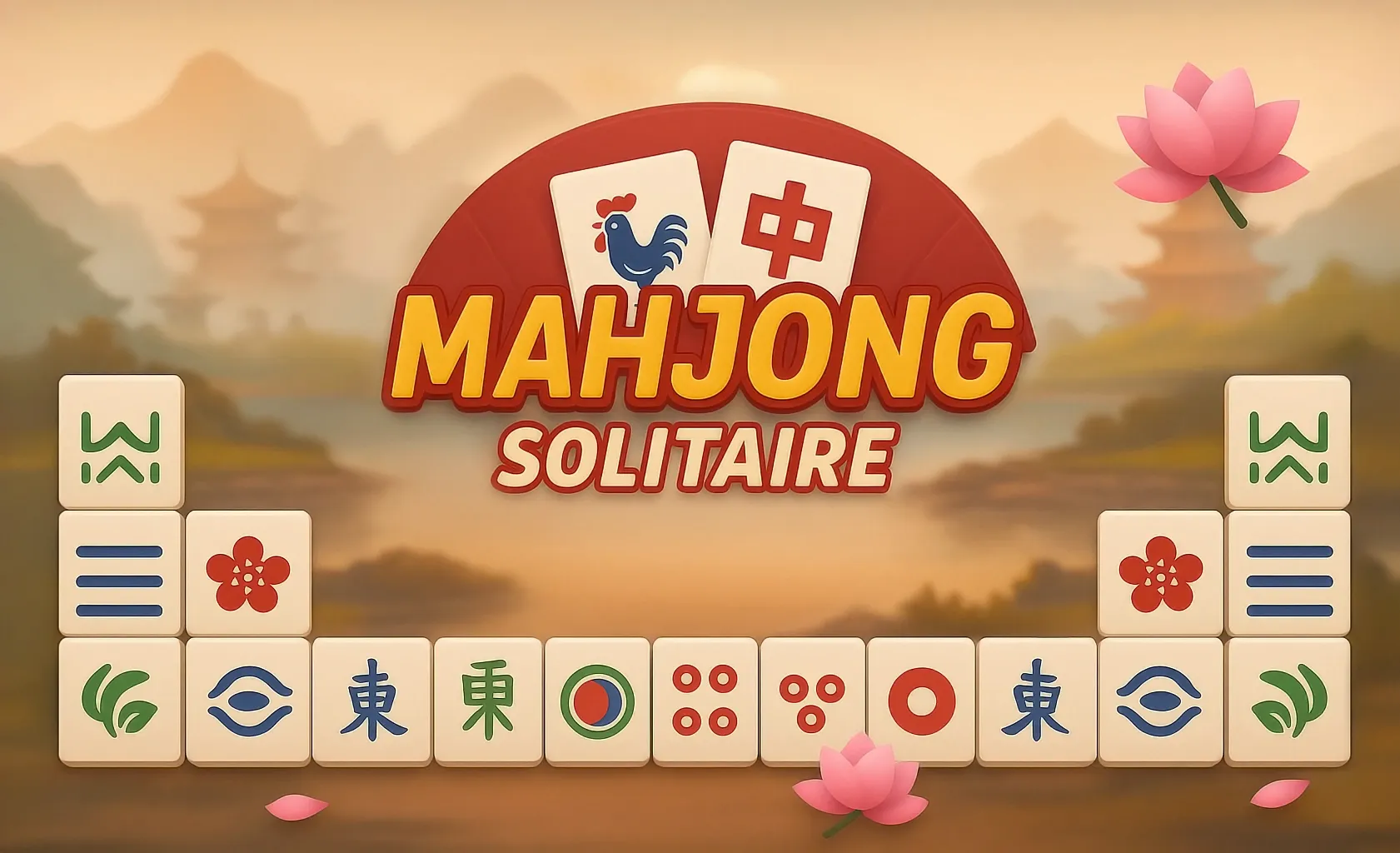
Mahjong Solitaire is a game that falls into two categories at once. On the one hand, it may appear as an assembly of ancient characters and repetitive clicks. Yet, on the other hand, this is a highly complex architectural game in which each wrong or thoughtless decision may lead to a situation with no solutions.
That is precisely why mahjong solitaire should be seen in terms of its relaxation and logical sides combined to see why it is such an interesting game.
Table of contents
The Zen of the Tiles: Why Solitaire Is a Relaxing Pastime
For many, the primary appeal of this solo game is its ability to act as a digital defragmenter for the mind. With a new board set up before you, there is no mistaking the objective at hand, and the confusion of the day melts away. There is an almost mystical tranquility that emanates from analyzing the detailed designs of Bamboos, Circles, and Characters to make the first match.
In the initial phase of each layout, meditation becomes a reality. Matches are easy to find, and the constant elimination of tiles creates a beautiful process of visual organization. This is perhaps one of the best benefits of playing solitaire games; it allows players to relax and sort out their chaos.
With most of the current versions of digital solitaire taking care of the complicated process of the layout and even providing hints on possible matches, all the player needs to do is let go and enjoy the process.
The Sudden Shift: Turning Into a Brain-Teasing Challenge
The true nature of the game reveals itself once the top layers are gone. This is when the leisurely hobby transitions to become an intriguing mental activity. While other games are 2D card-based puzzles, Mahjong Solitaire is a 3D game. Removing each piece creates a domino effect on the others.
The reason for its difficulty lies in the Free Tile rule, which requires that for a piece to be used, it should neither be covered by another nor have any sides closed. This creates a hidden maze. You might see a perfect match for a tile you desperately need, but it is wedged between two others or buried under a stack of Honor tiles. Suddenly, your casual game requires intense foresight.
You have to ask yourself: If I take this pair now, will I trap the tile I need three moves from now? This shift in perspective is what makes the game a legitimate test of logic and spatial awareness, often requiring the same level of focus found in complex solitaire variations to successfully navigate.
Mastering the Maze: Logic Over Luck
To navigate the more difficult solitaire variations, you must move beyond simple matching and start thinking like an architect. The challenge lies in managing the Tallest Stacks and Long Rows. The tallest piles hide the most information; until they are lowered, you are essentially playing blind.
Another important trick is to start with the highest peaks. If you neglect to play the high stacks while concentrating on simple matches at the lowest layer, then you are bound to come to a stage where there are no more moves left. That is what makes the game addictive – it requires you to overcome your immediate temptation to satisfy yourself by matching simple combinations while sacrificing the potential benefits of future possibilities. Mastering such tricks for playing solitaire helps turn it from a game of luck into one of skills.
The Unique Role of Bonus Tiles
There is only a minor yet essential safety measure in this game through the Bonus tiles – Seasons and Flowers. Unlike other tiles, the Bonus tiles do not need to be matched with their precise counterparts.
These tiles are simply decorative in a more relaxed setting; they are easy to remove. However, in an interesting design, they turn into wild cards. A professional player always keeps the flexible matches until the end of the game to use them to crack the toughest row in the puzzle.
This simple rule modification introduces a resource-management element, making the game more complex than a simple matching challenge. Applying these solitaire techniques transforms the experience from a game of luck into a strategic exercise where every saved tile counts.
Conclusion: The Perfect Mental Reset
Mahjong Solitaire's universal appeal in the digital gaming sphere lies in its flexibility. It does not require a player to adopt a particular approach while playing. A player can take an easy level of the game to relax for ten minutes and feel the aesthetic balance of the tiles. Or he/she may wish to test his/her analysis skills by taking up a tough pyramid game.
The shift from an entertaining game to an intellectual challenge is what gives the greatest pleasure. There is a unique sense of achievement in finding the tile that was holding you back. Whether you are playing for the Zen or the win, the game offers a perfect mental reset, leaving you sharper and more focused than when you started. Exploring this mahjong solitaire explained through the lens of mental clarity, shows why it remains a favorite for those seeking both peace and a rigorous mental workout.

How to Play Spider Solitaire With 4 Suits (Rules & Strategy)
Master how to win 4-suit Spider Solitaire with expert strategies, step-by-step tips, and proven moves. Beat the hardest version — start winning today!
8 Mahjong Strategies to Win the Game Every Time
Master mahjong strategy with simple, effective techniques to clear tiles faster, improve focus, and win more games—start playing smarter today!
Pyramid Solitaire Card Setup: Step-by-Step Guide for Beginners
At first glance, you may think Pyramid Solitaire is a relaxing pastime game with simple rules – just match cards that total 13 and clear the pyramid. Well, you’re wrong because if you’ve played the game, you know that winning is not just about luck. It’s about thinking ahead to ensure you don’t get stuck. That means effective use of the stockpile and recognizing the most strategic plays. So, if you’re new to pyramid solitaire or simply looking to improve your skills, this guide explains to you how to control the game and avoid running out of moves.

How to Win Solitaire: Smart Tips to Increase Your Success Rate
Solitaire can be deceptively simple and easy to start, yet challenging to master. In fact, even experienced players find winning consistently quite challenging. Why? Because it takes more than just knowing the rules. It’s also about choosing the right moves at the right time, although that can be difficult to wrap your head around if it’s your first play solitaire online. Thankfully, this guide outlines the strategic insights that will help you improve at solitaire by thinking ahead and making every move count. So, stick around and become a master.

How to Set Up Solitaire: Easy Step-by-Step Guide
Solitaire remains a top choice for card gamers globally today. Players find this game appealing due to its solo play and simple equipment: a standard deck of cards. Nevertheless, Solitaire must be laid out correctly. It is intended to be played fairly and smoothly, providing the desired challenge and joy. This article explains the process of setting up Solitaire with cards, discussing the well-known Klondike type and other well-liked variants (Spider, Pyramid, and TriPeaks).


