

Solitaire of History: Origins and Evolution of the Classic Card Game

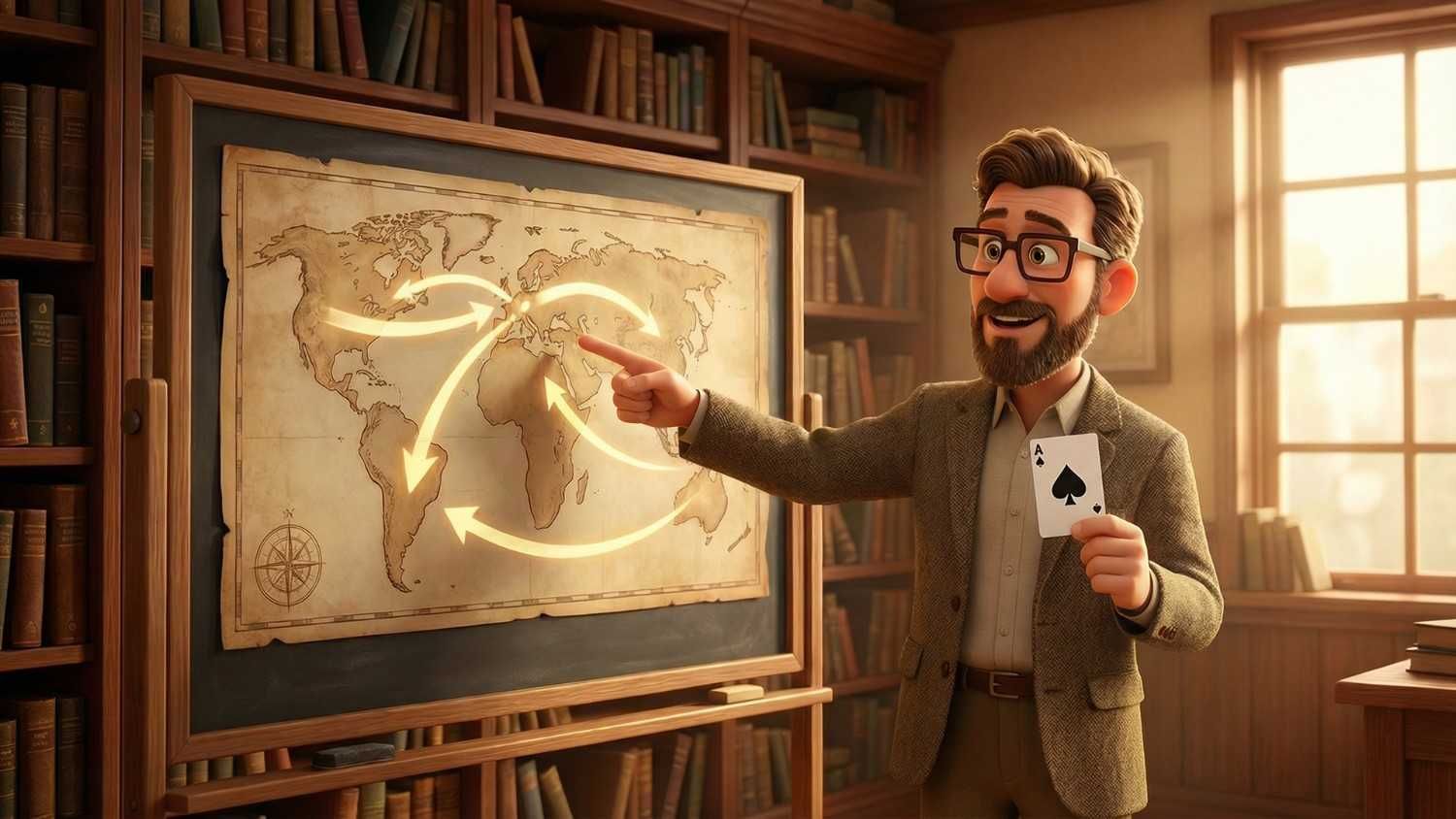
The solitaire of history begins long before digital screens and online card platforms. This simple yet strategic game has entertained players for centuries.
Solitaire, also known as Patience, Kabale, or Réussite, progressed from an enigmatic diversion to a popular form of entertainment for one. Although you can now conveniently play Solitaire online free of charge, this timeless game continues to unite people through thought, determination, and talent.
Table of contents
Origins of Solitaire Games

Solitaire can be traced back to the 18th century in Europe, specifically in France, Germany, or Scandinavia, where it is believed that solitaire was invented. This is because most historians assume that the game started as a form of the practice of fortune telling when the cards were spread in a symbolic manner in order to foretell.
Even the name of the game, solitaire, is of French origin, which means alone, and the game is a great embodiment of a lonely but strategic attitude. In other parts of Europe, it was referred to as Patience with a focus on calmness and concentration. This regional split is exactly what drives the patience vs solitaire debate, same game, two names shaped by two different cultures.
European History Early References
Towards the end of the 18th century, printed German and French manuals gave instructions on early solitaire card layouts and developed out of divination exercises into structured forms of leisure.
Soon, solitaire became popular among the aristocratic circles as a high culture among the intellectuals and the nobility.
Initial Recording of Solitaire Card Games

The earliest known forms were in Germany, recorded in about 1783 in Das Neue Konigliche L'Hombre-Spiel. Solitaire became a continental fashion and spread to England in the 19th century over the next several decades, via courts, cafes, and so on.
Who Invented Solitaire?

The true inventor of solitaire remains unknown. Some theories credit French prisoners during the Revolutionary period, while others highlight Scandinavian origins rooted in early tabletop strategy games.
Early Game Variations That Influenced Modern Solitaire
Foundational variations of solitaire helped shape its modern form:
- Patience: A methodical French game rooted in endurance and discipline.
- Kabale: A Scandinavian version representing secrecy and clever arrangement.
- L'Hombre: A German-Spanish influence that introduced ranked card sequencing.
Why the Inventor Remains Unknown
Because cards circulated widely through trade and oral teaching, documenting the exact creator was impossible. Solitaire's history evolved organically, making its origins a shared cultural creation rather than the work of one inventor.
When Was Solitaire Invented?

Timeline of Solitaire’s Early Development:
- 12th century: Paper playing cards emerge in China.
- 14th–17th centuries: Cards spread through the Middle East into Europe.
- 1780s: First recorded solitaire card games appear in Germany.
- 19th century: Solitaire gains recognition in France and England as a noble pastime.
- 1890s: Klondike Solitaire becomes popular during the Canadian Gold Rush, a classic version many players still play free online Klondike Solitaire today.
Evolution 18th -19th Century
Solitaire was a token of patience and discipline in the Victorian era. It became a domestic pastime, and it became established as a game of mind and silent concentration, with books like Illustrated Games of Patience (1870) turning it into an activity that everyone can do.
Diffused in Europe and America
Solitaire travelled across the Atlantic in the 19th century. It was prominently featured in American magazines such as Hoyle's Book of Games, which helped turn it into an enduring part of the West's leisure culture.
History of Solitaire the Card Game
Classic Variants: Klondike, FreeCell, Spider, and Pyramid
The most played versions of solitaire demonstrate their strategic complexity and timelessness:
- Klondike Solitaire: A 3 Card Solitaire, also called 3 Card Solitaire, requires the player to construct suit foundations as s/he draws three cards simultaneously. This variation also has the fastest solitaire game ever won.
- FreeCell Solitaire: Tactical and rational, where one has to plan.
- Spider Solitaire: A two-deck game full of sequence management.
- Pyramid Solitaire: It has a balance between logic and luck; the game is based on matching cards to make 13, with 13 being the total.
Both variants of solitaire are patient, pattern-finding, and spatial-reasoning games, with a different level of twist on the original gameplay.
Solitaire Literary and Cultural Allusions
Solitaire was a symbol of loneliness and study that permeated the 1800s literature. It is even said that Napoleon Bonaparte played it in exile, but this only added to its status as an intellectual and thought-provoking game.
Going Digital (Solitaire on Windows and the Internet)
The digital revolution began in 1990 with Windows 3.0 launching Microsoft's Solitaire. It was developed by Wes Cherry and written by Susan Kare, and it taught people how to use the mouse controls by playing an interactive game.
By the 2000s, Solitaire was a household game on computers everywhere. You can now play free online Solitaire in all browsers and mobile applications, and this game started a 250-year history of playing the game on a tabletop and moving to a touchscreen.
Why Solitaire Is Still Popular Today
Ease of use and Availability
There is no other card game that is as easy and challenging as solitaire. The game rules are simple, the goal is easy to understand, and each hand is a mixture of talent and luck.
The Cognitive and Leisure Benefits
Solitaire is a game that improves the mind by boosting memory, sequencing, and problem-solving. It is also very relaxing to concentrate on- the perfect activity to be mindful and relaxed.
Digital Platforms Adaptation and Mobile Apps Adaptation
The new platforms have transformed the enjoyment of solitaire for the players. The digital era has seen the development of solitaire with personalized decks and dark modes, challenges and leaderboards, and more. It could be Klondike Solitaire, Spider Solitaire, or Pyramid Solitaire: the excitement of reason and patience is the same.
Conclusion
Solitaire has a centuries-old history: it combines mystic fortune-telling, royal luxury and online technology. The person who invented it might have been swept away in time, but the nature of it remains in millions of players around the world.
The classic game of patience, however, through Klondike Solitaire, FreeCell, Spider Solitaire, and Pyramid Solitaire, continues to pose one common challenge: think, plan, and persevere.
FAQs
- The inventor of solitaire is unknown, but it was likely developed in Germany or France during the late 17th-18th century. For the first time, the Solitaire came under a book, and after that, it continued to evolve into the modern day, where you can play it online.
- Solitaire was first written about in literature around 1783, and similar games were written about in Europe shortly afterwards. It first appeared in Germany, then spread to France, and subsequently gained popularity throughout Europe, eventually becoming famous worldwide.
- The game was developed in Europe, and the evidence most likely refers to France or Scandinavia. However, the first idea originated in Germany or France, but the modern solitaire game is believed to have its roots in Europe.
- The solitaire game that was initially created was a patience game based on numbered sequences and laid out in tableau play. However, when it started to go around the different parts of Europe, it started to change, and then in Europe it took its shape.
- Since the European parlor tables to the computer Klondike and Spider Solitaire, it has easily changed with the habits of each generation, but still retained its classic nature. Though the toughness and more strategic variation came in the game, the origin will be the same.
Benefits of Solitaire: Boost Your Mind and Focus Today
Discover the benefits of Solitaire for brain health, focus, memory, and stress relief. Learn how this classic card game sharpens thinking and boosts mental clarity.

Is Every Solitaire Game Winnable? Discover the Truth Today
Uncover the history of Solitaire and trace its evolution from early card traditions to the iconic game enjoyed by millions today.
13 Types of Solitaire Games: The Ultimate Guide (With Rules, Variations & Tips)
Explore the different types of Solitaire games including Klondike, Spider, FreeCell, Pyramid, and more. Compare rules and find the version you enjoy most.

Word Hurdle Solitaire Game: Rules Explained
Word Hurdle Solitaire is an exciting card-based game that tests your word-building skills. This guide covers the complete rules, differences from other games, scoring system, and tips for beginners.
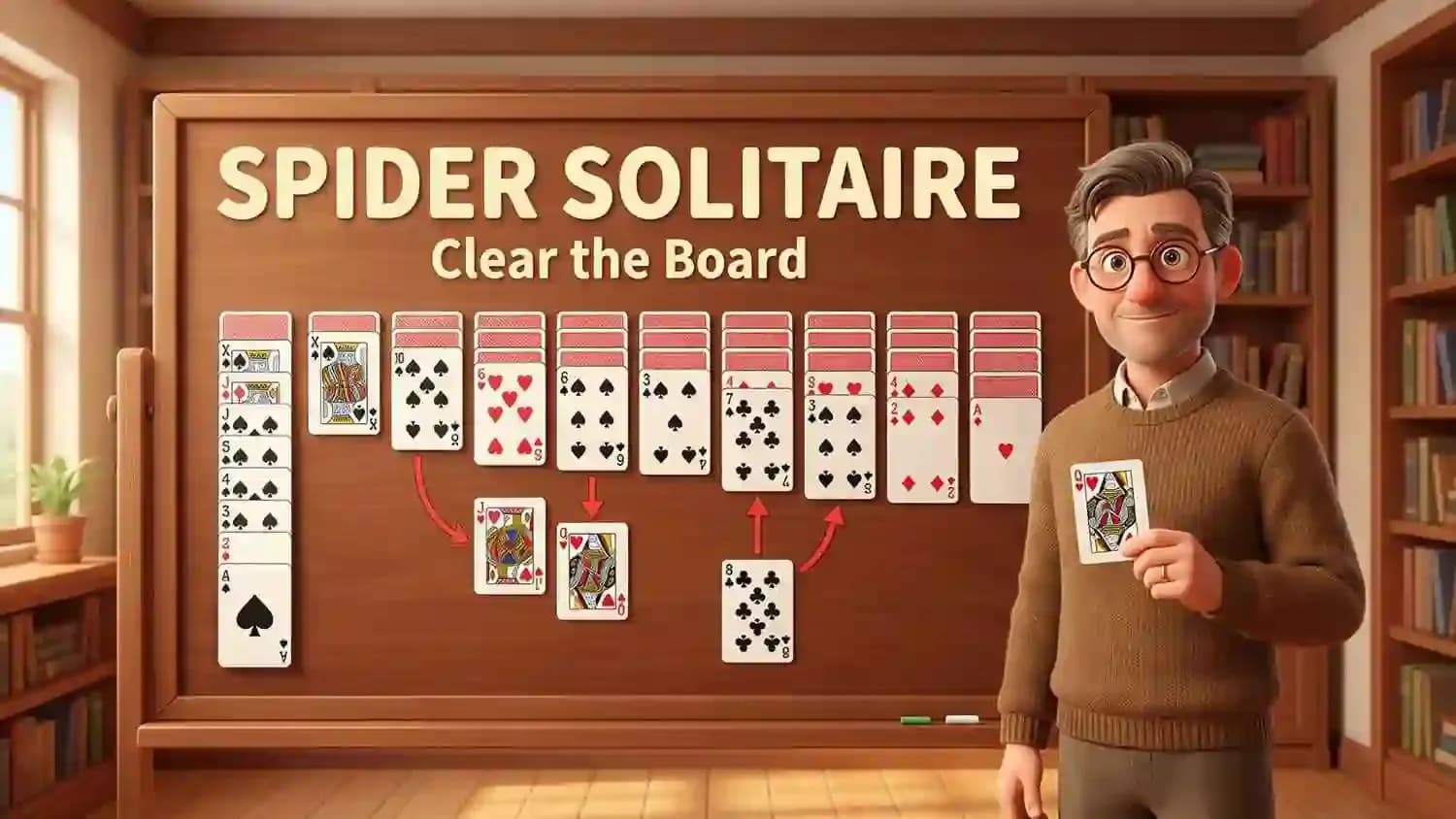
Spider Solitaire Rules: How to Play, Set Up & Win (Complete Guide)
How to play Spider Solitaire made easy—learn the rules, card setup, and proven strategies to improve your skills. Play smarter and win more games now!


