


Spider Solitaire Rules: How to Play, Set Up & Win (Complete Guide)

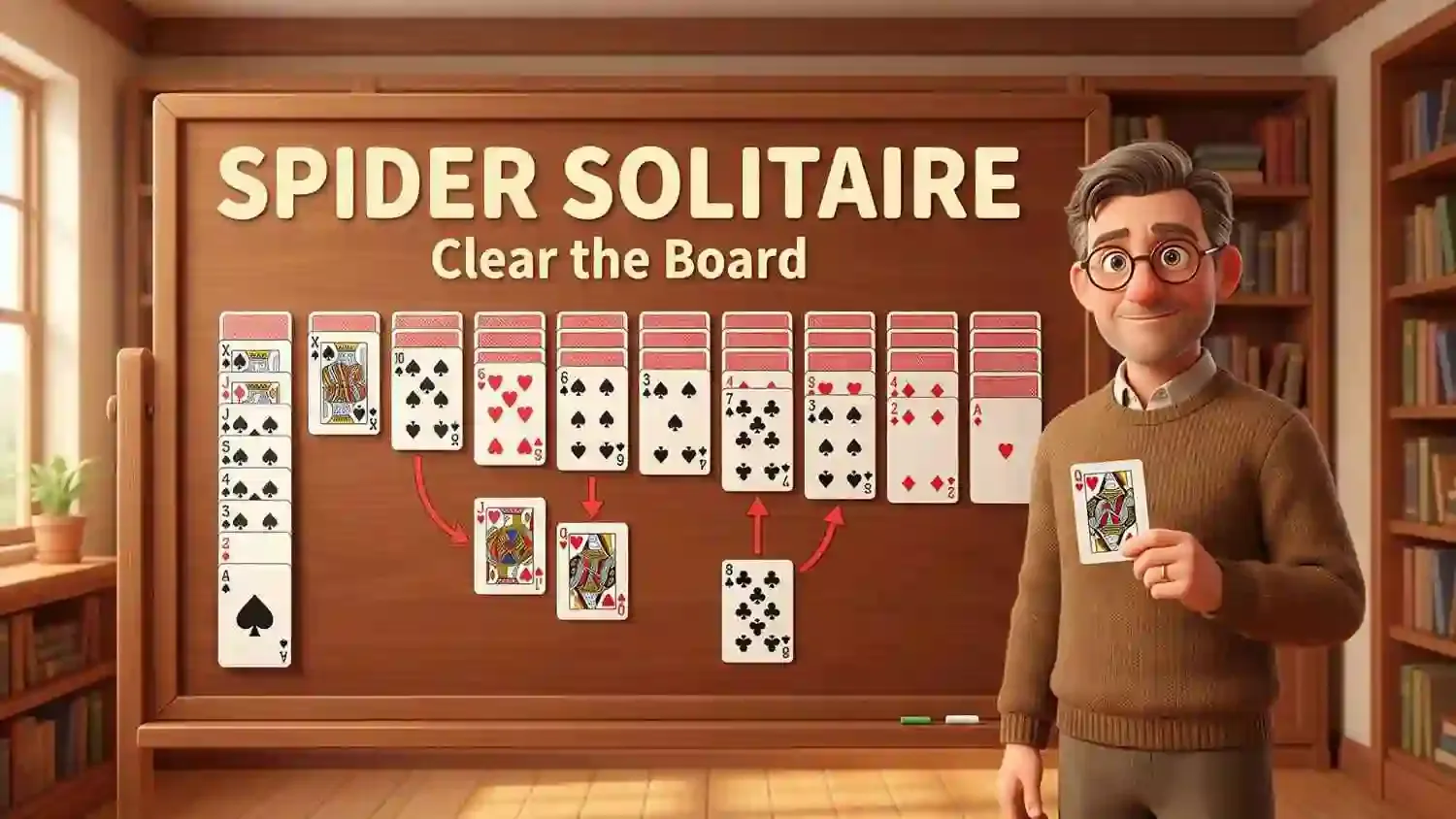
Spider Solitaire is played with two standard 104-card decks. The game begins with 54 cards dealt across 10 tableau columns, leaving a stockpile of 50 cards to be drawn 10 at a time when moves are exhausted.
The primary goal is to arrange cards in descending order from King to Ace. While you can stack cards of any suit in descending order to clear space, you can only move multiple card groups if they belong to the same suit. Once a complete same-suit sequence from King to Ace is formed, it automatically clears the board. Empty columns are highly valuable and can be filled with any available card or valid sequence.
Just like the name Spider Solitaire, you need to spread out your webs around the deck to look for the best opportunity to win the game, and you need to be more patient while playing this variation, which you can play solitaire online.
Table of contents
What Is Spider Solitaire?

Spider Solitaire gets its name from the eight legs of a spider. You need to build eight complete sequences (like eight spider legs) using 104 cards from two decks. Your goal is to arrange cards in order and move them to special piles called the foundation. It sounds simple, but it's actually tricky. Today, many players prefer to play Spider Solitaire online for free to practice strategies, restart deals easily, and improve their winning chances. sounds simple, but it's actually tricky.
The Main Goal: Build Eight Complete Sequences
Build eight complete sequences from King down to Ace, all in the same suit. When you finish a sequence, it moves to the foundation automatically. Win when all 104 cards are organized in the foundation piles.
Spider vs. Regular Solitaire: Key Differences
If you know how to play Klondike solitaire, Spider feels like the advanced version with tougher restrictions. Here's what makes Spider different. Regular solitaire uses one deck with seven piles. Spider uses two decks with ten piles. In regular solitaire, you can stack red cards on black cards. But in Spider, you can only complete sequences using the same suit.
How To Set Up Cards in Spider Solitaire
Setting up cards in the Spider Solitaire can help the player to use the least amount of moves to win the solitaire game.
Starting Materials: Cards and Columns
Spider Solitaire uses 104 cards from two full decks mixed together. When learning how to play solitaire, this ten-column setup gives enough room to move cards while keeping the game challenging.
The Exact Card Deal: Where Every Card Goes
When you start, here's exactly how cards are placed:
- First 4 columns: 6 cards each (5 face-down, 1 face-up on top)
- Last 6 columns: 5 cards each (4 face-down, 1 face-up on top)
- Leftover cards: 50 cards stay in a pile (called the stockpile)
So you start seeing only 10 cards. The other 44 are hidden, and finding them is what makes the game interesting.
Initial Spider Solitaire Card Layout
Why does this matter? The first four columns have more hidden cards, so focus on moving cards from those columns first. Hidden cards are like treasure; you want to reveal them as soon as possible because they give you more options to play.
The foundation (the place where completed sequences go) sits above your ten columns, waiting and empty.
Spider Solitaire Rules You Must Know
There are several Solitaire rules that need to be understood before you learn more about the Spider Solitaire Rules, and it helps to also understand the Odds of Winning Solitaire to get a better idea of how difficulty impacts success rates.
What Moves Are Allowed?
Only face-up cards can move. Face-down cards stay put until the cards covering them are gone. You can move one card at a time or move multiple cards together as a group, as long as they follow the rules.
Cards Must Go Down in Order
Remember: King, Queen, Jack, 10, 9, 8, 7, 6, 5, 4, 3, 2, Ace. You can only put a card on top of the next highest card. A 5 goes on a 6. A Jack goes on a Queen. That's it.
Suits Matter (Sometimes)
Here's the tricky part. While you're playing, you can mix suits. A heart 5 can go on a spade 6,no problem. But when you want to move cards to the foundation or move multiple cards together, they all have to be the same suit. This is what makes Spider hard.
Completing Sequences
When you build a complete King-to-Ace sequence in the same suit, boom! It automatically goes to the foundation. You don't manually move it. The game does it for you. This frees up space and gets you closer to winning.
Using the Stock Pile
You have 50 cards left over in the stockpile. When you run out of moves on your ten columns, you can deal 10 cards at once (one per column). Here's the catch: all ten columns must have at least one card before you can deal. You get to deal only five times total, so use this wisely.
Rules That Confuse Beginners
Many players get confused between spider solitaire vs regular solitaire rules, but with this information, you will be able to understand them well.
Mixing Suits While Playing
You can stack a heart 5 on a spade 6. That's totally fine during the game. Just remember, you can only move them together later if they're the same suit. It's like organizing as you go.
Moving Groups of Cards
You can move multiple cards together, but they must be in order and of the same suit. A Jack and 10 of hearts can move together onto a Queen of hearts. But a Jack of hearts and a 10 of spades can't move as a group.
When Can You Deal from Stock?
Don't deal too early. You can only deal when every column has at least one card. If you empty a column, put any card there first, then deal. Most beginners deal too much and get stuck. Try to find every move possible before touching the stockpile. With understanding these rules players also understand how to win spider solitaire following the rules.
How To Play Spider Solitaire? (Step-by-Step)
Step 1: Look at Your Cards
You start with 54 cards on the table and 50 in the stock. Spend a moment checking what you can do. Which cards can move? What will happen if you move them?
Step 2: Find Moves That Reveal Hidden Cards
This is priority number one. If a move will flip a hidden card face-up, do it. Hidden cards are golden, they usually unlock new moves and opportunities.
Step 3: Build Down from King to Ace
Start stacking cards in descending order. King on Queen. Queen on Jack. Keep going. You're building the sequences that will eventually go to the foundation.
Step 4: Try to Use the Same Suit
When possible, move cards of the same suit together. This gets you closer to finishing sequences. But don't force it, sometimes you need to be flexible.
Step 5: Complete Sequences Go to Foundation
When you finish a King-to-Ace sequence in the same suit, it jumps to the foundation automatically. Celebrate! You're one step closer to winning.
Step 6: Deal from Stock When Stuck
Once you've used all the tableau moves, deal 10 cards from the stock. New cards often create new opportunities. Keep playing until you win or get completely stuck.
Step 7: Keep Going Until Victory or Game Over
Keep moving, revealing, and building until either all eight sequences are in the foundation (you win!) or you genuinely have no more moves (game over).
Spider Solitaire Difficulty Levels Explained
Spider comes in three versions, getting harder as you go. Choose based on your skill level because the first thing you need to understand is how to set up solitaire cards on the table.
One-Suit Spider Solitaire
Perfect for Beginners, this version uses only one suit (usually all spades). No suit confusion. Just focus on order and strategy. It's the gentlest version.
Why It's the Easiest: Since all cards are the same suit, every sequence you build is already valid for the foundation. You can focus on the basic strategy without suit stress. About half of all one-suit games can be won (47-52%). That's a real challenge but totally doable.
Two-Suit Spider Solitaire
Now you have two suits (usually hearts and spades). You need to think about suits while you play. This adds real difficulty to player in the Spider Solitaire 2 suits game.
More Thinking Needed: With two suits, you'll build mixed-suit sequences, then figure out how to split them into proper suits. Your brain works harder. Your win rate drops to about 16-17%. Most people will lose more than they win. Two-Suit Spider is a stepping stone toward the most difficult solitaire games, where suit restrictions alone can make even strong players hit a dead end.
Four-Suit Spider Solitaire
The Real Deal is the actual Spider Solitaire game with all four suits (hearts, diamonds, clubs, spades). It's the hardest version and what true Spider enthusiasts play. This is the version most people picture when they imagine Spider Solitaire 4 Suits in its full form, since every rule and restriction reaches its peak difficulty here.
Why It's So Tough: You'll lose about 19 out of every 20 games at this level (only 6% of the solitaire games are winnable). Suit requirements create tons of blocking situations. Even expert players expect to lose. Play this version because you love the challenge, not because you expect to win often.
Most players who struggle with how to play Spider Solitaire with 4 suits never make it past the first few deals.
How to Improve at Spider Solitaire Faster
Priority #1: Reveal Hidden Cards
Every face-down card is potential. When you have a choice between two moves, pick the one that flips a new card. This is the most important strategies for solitaire game.
Build Same-Suit Sequences Early
Don't randomly shuffle cards around. Deliberately work toward finishing at least one same-suit sequence before dealing from stock. This shows you're thinking strategically.
Empty Columns Are Powerful
When you clear an entire column, you've created a temporary storage space. Use it strategically to rearrange the cards below. Never fill an empty column just because it's empty; fill it with purpose.
Avoid the Stock Pile
Only deal from stock when you truly have no other moves. New players deal constantly and block themselves. Be patient. Find every tableau move first.
Think Ahead
Ask yourself: "What happens if I make this move?" Imagine the next two or three moves before you play. This prevents blocking and creates winning paths.
Progress Slowly: Easy → Medium → Hard
Master one suit first. Then move to two suits. Only try four-suit when you're solid at two-suit. Jumping levels kills motivation. Build skills step by step.
FAQs
- Two complete decks equal 104 cards total. This gives you enough cards to build eight complete sequences (one for each suit pair).
- Keep it simple: move cards down (King to Queen to Jack, etc.), use same-suit sequences for foundation, move only face-up cards, and deal from stock only when all columns have a card. That's it.
- Start with a one suit. You'll actually win games and learn strategy. Move to two suits once you're comfortable. Try four-suit when you want maximum challenge.
- Yes, way harder. Regular solitaire has about a 33% win rate. Spider's four-suit version has only 6%. Spider needs real strategy and forward planning. It's definitely the hardest solitaire games.
- Yes. You can place absolutely any card or any valid moving sequence into an empty space. This is a huge help compared to regular solitaire, where only Kings can fill an empty spot.
- On the hardest 4 suit mode, you will win about 1 out of every 3 games if you play perfectly. The easiest 1 suit mode has a very high win rate because nearly every game can be solved, while 2 suits sits right in the middle.
- Spider uses 2 decks and 10 columns, while regular solitaire uses 1 deck and 7 columns. In Spider, you clear full matching columns from King to Ace, you can put any card in empty spaces, and you deal new cards onto every column at once instead of using a waste pile.

Benefits of Solitaire: Boost Your Mind and Focus Today
Discover the benefits of Solitaire for brain health, focus, memory, and stress relief. Learn how this classic card game sharpens thinking and boosts mental clarity.

Is Every Solitaire Game Winnable? Discover the Truth Today
Uncover the history of Solitaire and trace its evolution from early card traditions to the iconic game enjoyed by millions today.
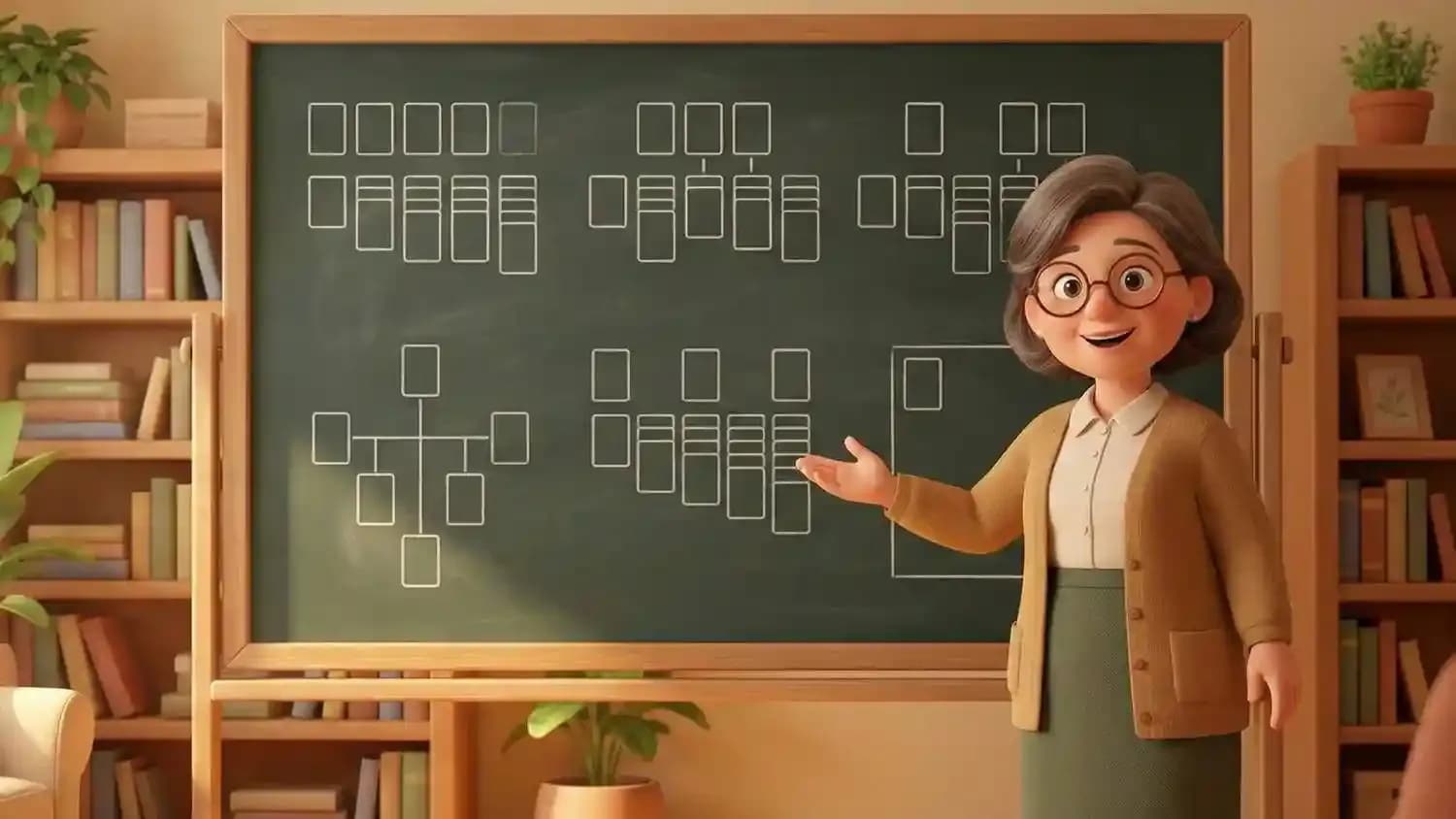
13 Types of Solitaire Games: The Ultimate Guide (With Rules, Variations & Tips)
Explore the different types of Solitaire games including Klondike, Spider, FreeCell, Pyramid, and more. Compare rules and find the version you enjoy most.

Word Hurdle Solitaire Game: Rules Explained
Word Hurdle Solitaire is an exciting card-based game that tests your word-building skills. This guide covers the complete rules, differences from other games, scoring system, and tips for beginners.

How to Play Klondike Solitaire: Rules, Setup, Tips, and Strategy
If you own a computer, you already know Klondike Solitaire — it’s the world’s most recognized card puzzle game. It was originally designed as a hidden game in Windows to teach users how to use a mouse, and millions fell in love. If you’ve just developed an interest in the game or want to learn winning strategies and expert tips, you’re in the right place.


