

Online vs Physical Solitaire: Which Is Better for You?
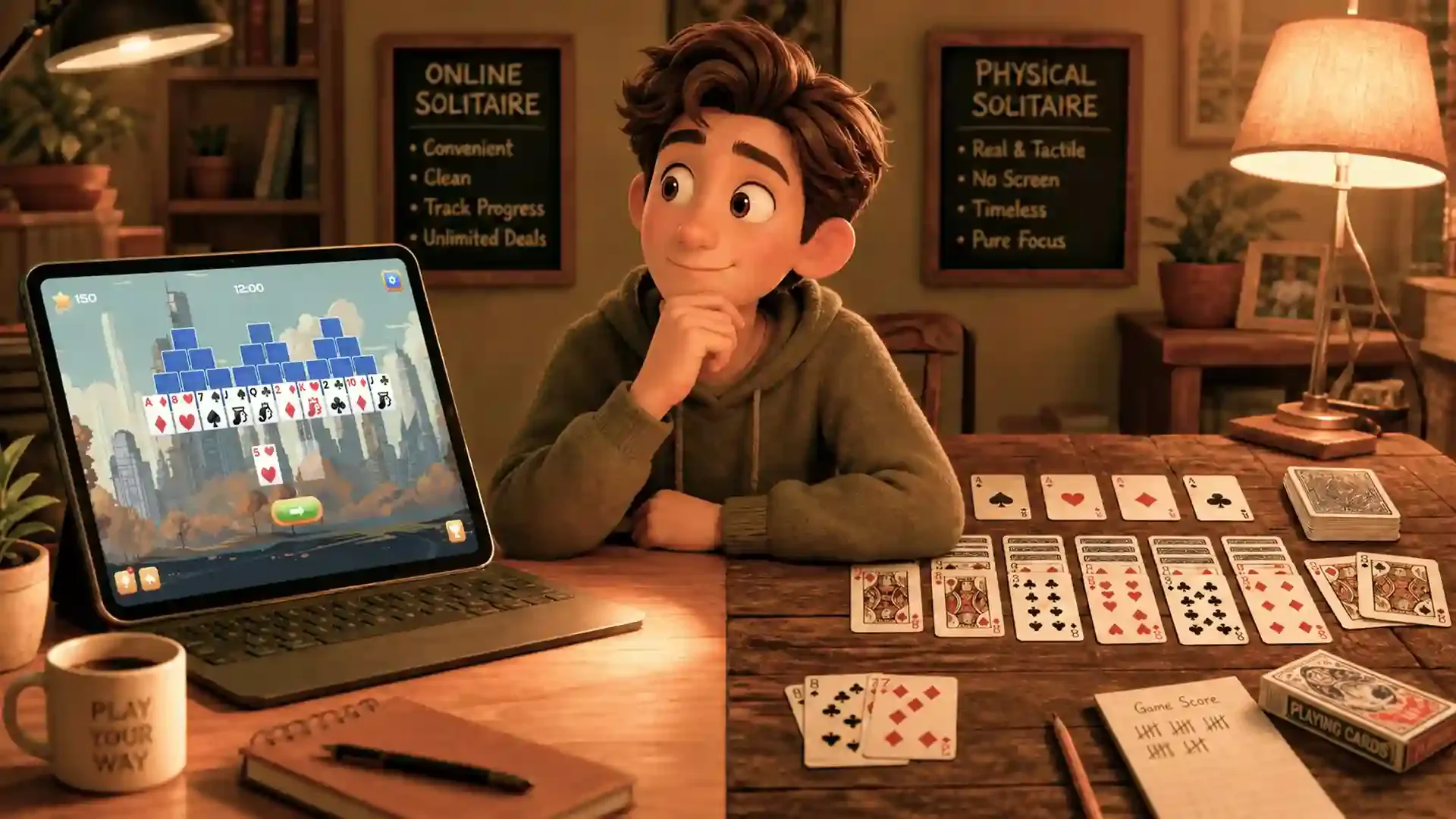
If you want a game right this second, play on your phone. Tap the play online Solitaire icon and you're in. The computer shuffles, deals, and even gives you hints if you get stuck. You can try a bunch of different versions—Spider, Klondike without learning new rules. Perfect for when you're stuck in a waiting room or hiding in the bathroom from your kids.
But sometimes you don't want to play fast games. Sometimes you want a slow and relaxing game. That's when you grab a real deck. Sit somewhere quiet, shuffle the cards yourself. Lay them out one by one. No screen, no sounds, no little pop-ups asking you to rate the app. Just paper and quiet.
So which Solitaire game should you pick? Our answer is both. During a crazy busy day, use the app. On another hand, during Sunday morning with nothing to do? Break out the cards and play physical Solitaire.
Table of contents
- What Is Online Solitaire?
- What Is Physical Solitaire
- The Key Differences Between Online and Physical Solitaire
- Advantages of Playing Physical Solitaire
- Online vs Physical Solitaire: Experience Comparison
- Online Solitaire Vs Physical Solitaire - Which One Is Better for Beginners?
- Can You Improve Skills Faster Online or Offline?
What Is Online Solitaire?
Online Solitaire just means you're playing cards on a screen. Could be your phone, your laptop, a tablet - doesn't matter. Lots of versions exist: Klondike, Spider, Pyramid, TriPeaks. The whole thing blew up back in 1990 when Microsoft put it in Windows. Suddenly everyone was playing on computers instead of kitchen tables.
These days, online Solitaire looks pretty nice. You get daily challenges, different backgrounds, and a bunch of features you could never do with physical cards.
What Is Physical Solitaire
Physical Solitaire is the old-school way. You need a Standard 52-card deck. In Europe, they used to call it "Patience." That name was given around the 1700s. Playing with a physical card means you shuffle, deal, and move everything by hand. No hints available and no undo button. Neither a computer will tell you that you messed up. Just you, the cards, and your own brain. You have to remember what is being played and be honest about the rules.
The Key Differences Between Online and Physical Solitaire
| Feature | Online Solitaire | Physical Solitaire |
|---|---|---|
| Setup Time | Instant | Manual setup |
| Convenience | Very high | Moderate |
| Assistance | Hints, undo | None |
| Portability | Phone/PC | Requires deck |
| Experience | Fast-paced | Relaxing & tactile |
| Distractions | Possible (ads, notifications) | Minimal |
When people talk about Online vs. Physical Solitaire, how quickly you can start is usually the first thing that comes up.
Instant Access
Here's the thing about online Solitaire, you don't have to think about how to set up Solitaire. It's already done. No shuffling. No laying out seven columns. No looking for a clean table. You click a button and the game starts. Whether you have five minutes or an hour, you are playing right away.
Helpful Features
Digital versions come with stuff you just can't get from real cards. The undo button lets you try different moves without wrecking your game. Hints help when you're completely stuck. Auto-complete handles the boring part at the end where you just have to move cards to the foundations. This all saves your time and clicking.
Multiple Variations
One app or website gives you tons of game types. You can switch from Klondike Solitaire Turn 3 to Spider Solitaire or Pyramid Solitaire without grabbing another deck or re-learning a new setup. If you like variety, that's a big deal.
Tracks Progress
Most Solitaire apps keep track of everything for you. Wins, losses, longest streaks, average time, Solitaire Scoring. Lots of them have daily challenges and leaderboards. It adds a little extra motivation to get better and beat your own records.
Advantages of Playing Physical Solitaire
Tactile Experience
There's something about handling real cards. The sound of a good shuffle. The feel of the cardboard. The way a stack slides from one pile to another. A touchscreen just can't copy that. For a lot of people, that physical feeling is why they play. Apart from this the Solitaire Scoring gives them a unique experience, something like a genius mathematician.
No Distractions
Physical Solitaire gives you a clean space. No pop-ups, no notifications. No "watch this ad for a hint" type of thing. No battery dying on you. Just you and the cards. That kind of quiet is hard to find these days, and it's a big reason people stick with physical play.
Better Focus
Since you have to remember the rules yourself and keep track of which cards have been played, physical Solitaire makes you concentrate differently. You can get into a flow state where nothing else matters. The deliberate pace encourages patience and thoughtful decision-making, offering genuine benefits of Solitaire for mental clarity.
Screen-Free Activity
Physical Solitaire gives you a real break from screens and blue light. Play a few rounds before bed, and your sleep won't get thrown off. No battery, no signal, no Wi-Fi needed—just a deck of cards. That's why a lot of people prefer it. It's perfect for camping trips, long flights, power outages, or anytime your eyes need a rest after staring at a screen all day.
Online vs Physical Solitaire: Experience Comparison
Speed of Gameplay
Online Solitaire is way faster. Games take minutes instead of dragging on forever. In online Solitaire shuffling, dealing, and cleanup happen instantly. Even slow animations are quicker than moving physical cards. Physical play is naturally slower. Some people hate that. Some people love it.
Learning Curve
For someone who has never played before, physical Solitaire is harder to learn. You have to figure out how to play Solitaire with rules and how to set up Solitaire correctly. Plus you need to remember the movement rules. Like building down in alternating colors. And only a King can fill an empty space.
Online Solitaire enforces the rules for you. It won't let you make illegal moves. It often highlights what you can do. That makes it much easier for a beginner to learn by just playing. Therefore, the learning curve of physical Solitaire is more than online Solitaire.
Enjoyment Style
Playing digital is usually about goals like how to beat your best time, finish a daily challenge, keep a streak going. Physical Solitaire play is more about the experience itself. The ritual, the patience, the feel of the cards. So, the answer to the question who is the winner in “online vs physical Solitaire” is that both have their demands and experiences.
Online Solitaire Vs Physical Solitaire - Which One Is Better for Beginners?
Online Solitaire is better for beginners. The computer stops you from making illegal moves, so you don't pick up bad habits. The undo button lets you try things and see what happens. Hints can teach you basic Solitaire strategy when you get stuck.
Trying to learn how to play Solitaire with a real deck often ends with you forgetting a rule or accidentally peeking at facedown cards. Once you understand how the game works, switching to physical cards is pretty easy.
If you're comparing Online vs. Physical Solitaire for a new player, online solitaire may be the better option.
When Should You Play Online Solitaire?
- When you want a quick game during a work break or while waiting somewhere
- To learn a new variant like TriPeaks Solitaire rules or Golf Solitaire rules without memorizing a complicated setup
- When you want to track your stats and compete against your own best scores
- If you like daily challenges and fresh content
- When you don't have a physical deck nearby
When Should You Play Physical Solitaire?
- When you want a screen-free break before bed or after a long day on a computer
- To enjoy a slow, tactile ritual instead of a fast challenge
- When you're somewhere without internet or power (or with a bad connection)
- To avoid ads, data collection, and all the engagement tricks built into free apps
Can You Improve Skills Faster Online or Offline?
You will get better at strategy faster online. Playing dozens of games in an hour, using undo to see what different choices do, and checking your stats (like your odds of winning Solitaire from different deals) gives you quick feedback. You can try out different Solitaire tips and see what happens right away.
But physical play builds different stuff: patience, memory, and how well you handle cards. For pure strategy and game knowledge, online is better. For patience and focus, physical Solitaire wins.
So when you're thinking about Online vs. Physical Solitaire for getting better at the game, it depends on what skills you want to build.
FAQs
- Yeah, online versions give you crutches like hints, undo, and auto-complete that you can't get with real cards. They also enforce the rules perfectly, so you can't make honest mistakes. That said, some people find physical cards "easier" because you can see all the played cards without having to remember them.
- Both are good, just different. Physical play helps with fine motor skills, spatial reasoning, and memory. You have to remember the game state yourself. Digital play helps with quick strategic thinking, pattern recognition, and making fast decisions. The question "is solitaire good for your brain?" gets a yes for both.
- Yes, physical Solitaire works anywhere. For digital, many apps (including the Microsoft Solitaire Collection) have offline modes once you download them. Online and Browser games need a connection.
- Online Solitaire is way more popular in terms of total games played. Mobile apps and Windows having it for decades made sure of that. Physical Solitaire is still played, but it's a much smaller thing now. Even within digital, people argue about browser Solitaire vs app Solitaire, but digital as a whole is the big winner.
Benefits of Solitaire: Boost Your Mind and Focus Today
Discover the benefits of Solitaire for brain health, focus, memory, and stress relief. Learn how this classic card game sharpens thinking and boosts mental clarity.

Is Every Solitaire Game Winnable? Discover the Truth Today
Uncover the history of Solitaire and trace its evolution from early card traditions to the iconic game enjoyed by millions today.
13 Types of Solitaire Games: The Ultimate Guide (With Rules, Variations & Tips)
Explore the different types of Solitaire games including Klondike, Spider, FreeCell, Pyramid, and more. Compare rules and find the version you enjoy most.

Word Hurdle Solitaire Game: Rules Explained
Word Hurdle Solitaire is an exciting card-based game that tests your word-building skills. This guide covers the complete rules, differences from other games, scoring system, and tips for beginners.
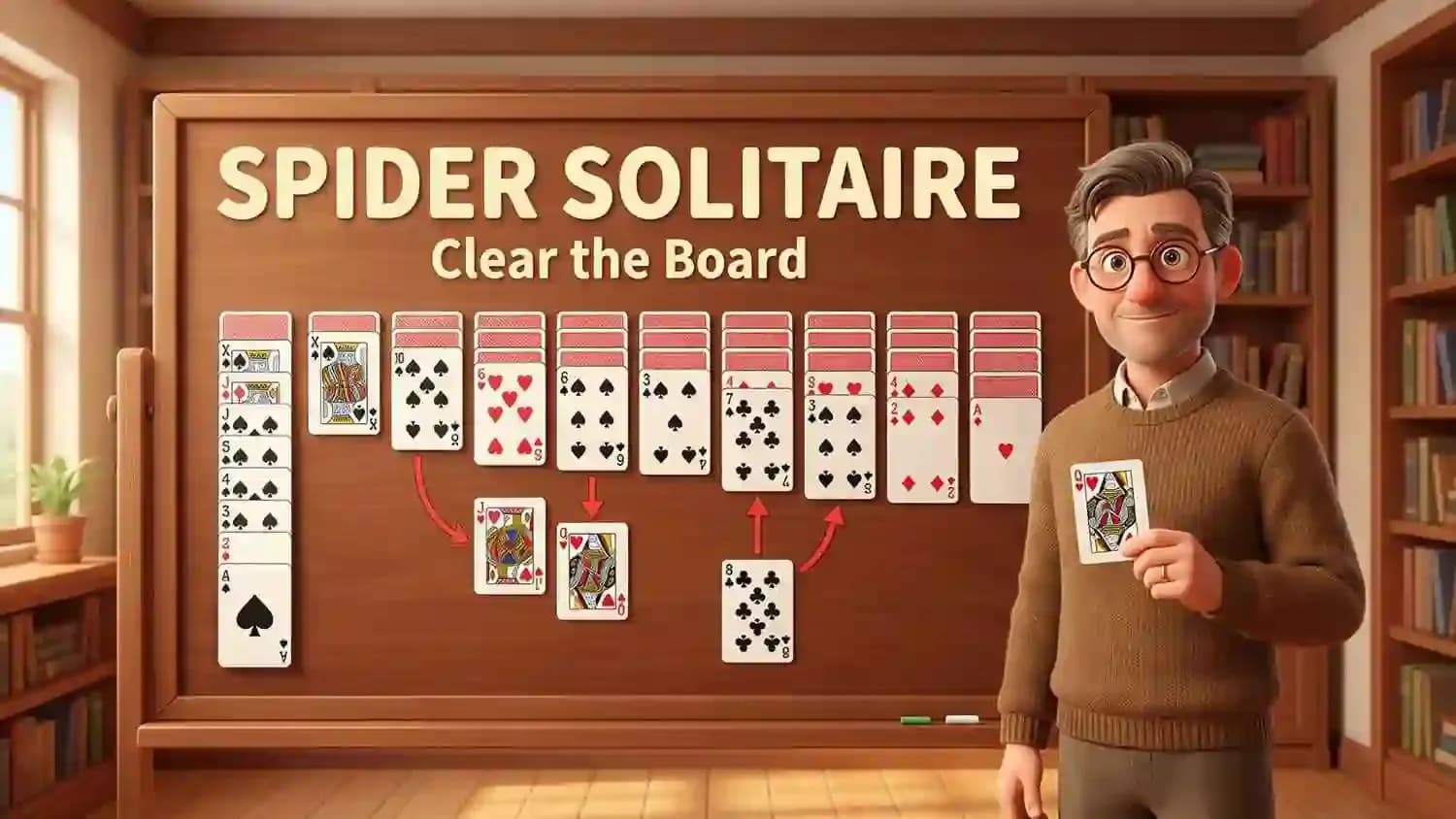
Spider Solitaire Rules: How to Play, Set Up & Win (Complete Guide)
How to play Spider Solitaire made easy—learn the rules, card setup, and proven strategies to improve your skills. Play smarter and win more games now!


