


Is Solitaire Luck or Skill? The Real Answer

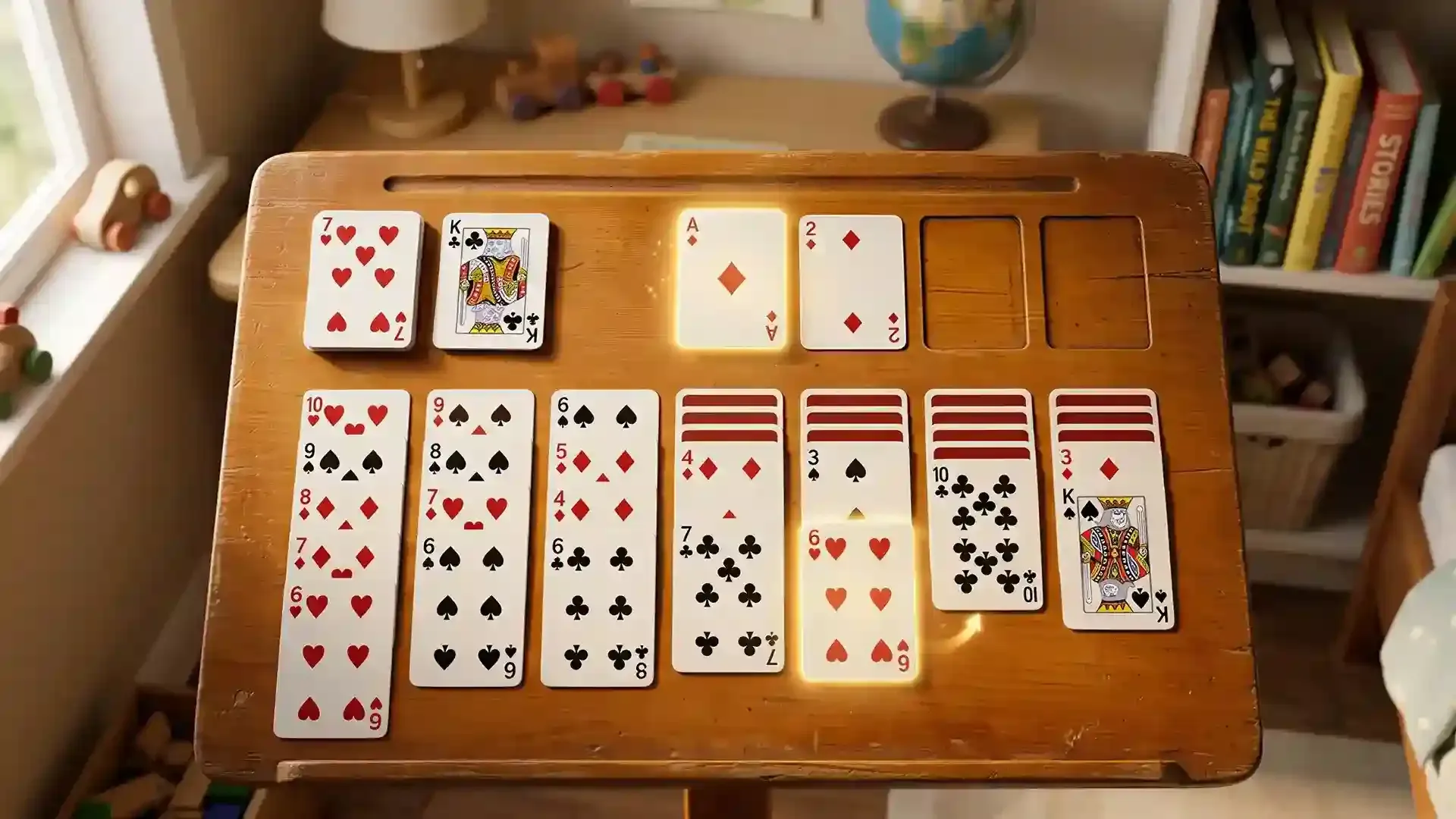
You turn a card, hoping it will open the board. Sometimes it does. It is even the bane of your sole plan. It is at that point that the question strikes: was it bad luck, or did you play the hand badly earlier?
The random shuffle is the start of solitaire, and the next move is up to you. The deal sets the stage. It all depends on how you play or what you decide, and you can test the score by playing solitaire online or offline.
Table of contents
Understanding How Solitaire Actually Works
Any game starts with a random shuffle, and you cannot do anything about it. Some deals become available instantaneously. Others can hardly be made out on the first card.
Some layouts are mathematically impossible to solve, and no shortcut or clever thinking can make them any different.
After the cards are down, all the moves are options. What card to move, when to draw, can a card be sent to the foundation now or not? The same deal can be given to two players, and they can all end up with totally different results. Same cards. Different results. That is not luck. That is skill, and even after all that, the benefits of solitaire are many.
How Much of Solitaire Is Luck?
In Klondike, about 80 to 90 percent of deals can be won in theory. Yet most players win far less, not because the game is impossible, but because their own moves block winning paths.
Many players blame luck when they lose. In reality, rushing cards to the foundation, clearing a column without a King, or ignoring face down cards often causes the problem. Bad decisions are not the same as bad luck, and mixing them up keeps players from improving.
Does Skill Matter in Solitaire?
Yes, and more than most people realize. Skill matters in solitaire in several concrete ways.
- Strategic decision-making: Means every move serves a purpose. Moving a card because you can is not a strategy. Moving it because it reveals a hidden card or sets up a future sequence.
- Planning ahead: It is the single most impactful habit. Before touching a card, ask what happens next. Does this move lead somewhere or just rearrange what you can already see, because it's quite important to know how to set up solitaire game?
- Managing foundations carefully: Sending every available card upward feels productive, but often creates tableau blockages. Knowing when to hold a card back is a matter of judgment, not luck.
- Stockpile timing: Separates beginners from experienced players. In Draw 3 games, the sequence cards become available with every pass. Skilled players plan around this. Beginners just draw and hope.
5 Key Skills That Improve Your Win Rate
- Revealing Hidden Cards First: It is important to focus on a move that turns a face-down card. The better informed you are, the better your decisions. The rearrangement of the visible cards must always come subsequently.
- Managing the Tableau Smartly: Do not empty a column without a King ready to fill it. An empty column without a King is wasted space that limits your options rather than expanding them.
- Knowing When to Hold Cards Back: When a red 6 and a black 5 remain to find a home, hold the 6. Rushing cards to the foundation is among the most frequent causes of lost games, which could have been won. It is one of the fundamental Klondike solitaire playing techniques, applicable to most types.
- Planning 2–3 Moves Ahead: Trace every move forward before making it. A move that opens one path but closes two others is not a good trade. Think in sequences, not single steps.
- Recognizing Dead-End Patterns: Experience teaches you to recognize trouble early. As the stockpile dwindles, the tableau is frozen, and the cards you require are buried deep; those bad omens are on the table before it's too late, especially when you find yourself Stuck in Solitaire and need to rethink your strategy.
This type of recognition also separates players who always win at solitaire from those who do not win very well.
Solitaire Variants – Luck vs Skill Comparison
The balance shifts significantly depending on which of the different types of solitaire games you are playing.
Klondike Solitaire
The traditional variant is at the midpoint of the spectrum. There is true uncertainty with concealed cards, but the effect of play is strategic. A good gamer scores decisively in comparison with an amateur on the same deals.
Spider Solitaire
Spider leans toward skill. The larger tableau and same-suit sequence requirement demand careful planning. Poor decisions compound fast, and luck has less room to rescue you. Understanding how to play spider solitaire properly can significantly improve outcomes.
FreeCell
FreeCell is the most skill-dominant variant. Nearly every deal is solvable, and all cards are visible from the start. Losses here are almost always decision errors, not bad shuffles. The benefits of solitaire as a mental exercise are most evident in FreeCell, where pure logic drives every move.
This level of control and predictability is often highlighted in a Solitaire vs FreeCell comparison.
Pyramid Solitaire
The Pyramid solitaire sits at the luck-heavy end. The pairing mechanic depends on which cards surface at the right time. If the cards you need are buried beneath each other, skill cannot rescue the game.
Can You Improve at Solitaire?
Players who replay lost games and learn from their mistakes start winning more often. With practice, they begin to notice risky setups early and understand the right time to make moves. That instinct only comes with experience.
Skill also helps in tough deals. A strong player can get more out of a bad shuffle than a beginner with the same cards. They may not win every time, but they see chances others miss. The difference between new and experienced players comes down to practice. These skills can also be strengthened by applying mahjong solitaire strategy that works or by practicing easy card games for two, which help improve decision-making and pattern recognition.
When Luck Truly Decides the Game
There are moments when luck genuinely is the deciding factor.
Some deals are impossible from the start. The Aces stay buried, key cards never appear, and the stock runs out without help. No strategy can fix a dead layout, which is why understanding concepts like Is Every Solitaire Game Winnable helps players separate luck-based losses from skill-based mistakes.
The key is knowing the difference. If the deal had no solution, it was luck. If mistakes blocked your options, it was strategy. That clarity is what helps players improve.
So, Is Solitaire a Game of Luck or Skill?
Is solitaire luck or skill? It is both, but not equally at every stage. Luck governs the deal. Skill governs everything after.
Is solitaire a game of luck or skill, the way chess is purely skill, or a coin toss is purely luck? Neither. It lives between the two, closer to skill than most casual players appreciate. The shuffle sets the boundaries.
Your decisions determine whether you achieve the best outcome. Strong players win significantly more often than weak ones on identical deals. That fact alone settles the argument.
Solitaire is not a lottery, and it is not chess. It lives in between, and that is what makes it worth playing.
Luck will always influence how the cards fall. Accept that, and stop blaming shuffles for losses that better decisions could have prevented.
Focus on what you actually control: which cards you move, when you draw, how you manage your tableau, and how far ahead you think.
Improve those things, and your solitaire win rate will follow. The shuffle never gets easier with practice. Your decisions do. If you want to practice on a reliable platform, here are the best free solitaire apps worth trying.
Frequently Asked Questions
- At the deal, luck plays the most important role. Around 80 to 90 percent of Klondike games are theoretically winnable, so the shuffle rarely produces a truly unbeatable layout. Winning a deal that you can win and making it a win are two different things, though nearly entirely reliant on the quality of the decisions made.
- Not mostly. Most of the losses are due to the wrong strategy, not to impossible deals. Players who stick to a pattern of play are much more likely to win, and this could not have happened if luck were the major factor throughout the game.
- Significantly. Decision-making, tableau management, stockpile timing, and planning ahead all directly affect how often you win. Players who share the same deal will often arrive at different results simply because of the quality of their moves.
- No, there are deals that cannot be solved mathematically, no matter how well they are played. Nevertheless, a talented gamer will win a far higher percentage of games. The idea is not to ensure that all the wins are made but to squander the few that can be won.
- Not always. Roughly 10 to 20 percent of Klondike deals cannot be won under any circumstances. In FreeCell, nearly every deal is solvable. The variant you play has a significant impact on how often luck alone decides the outcome before your first move.
Benefits of Solitaire: Boost Your Mind and Focus Today
Discover the benefits of Solitaire for brain health, focus, memory, and stress relief. Learn how this classic card game sharpens thinking and boosts mental clarity.

Is Every Solitaire Game Winnable? Discover the Truth Today
Uncover the history of Solitaire and trace its evolution from early card traditions to the iconic game enjoyed by millions today.
13 Types of Solitaire Games: The Ultimate Guide (With Rules, Variations & Tips)
Explore the different types of Solitaire games including Klondike, Spider, FreeCell, Pyramid, and more. Compare rules and find the version you enjoy most.

Word Hurdle Solitaire Game: Rules Explained
Word Hurdle Solitaire is an exciting card-based game that tests your word-building skills. This guide covers the complete rules, differences from other games, scoring system, and tips for beginners.
Spider Solitaire Rules: How to Play, Set Up & Win (Complete Guide)
How to play Spider Solitaire made easy—learn the rules, card setup, and proven strategies to improve your skills. Play smarter and win more games now!


