


Is Solitaire Good for Your Brain? Benefits Explained

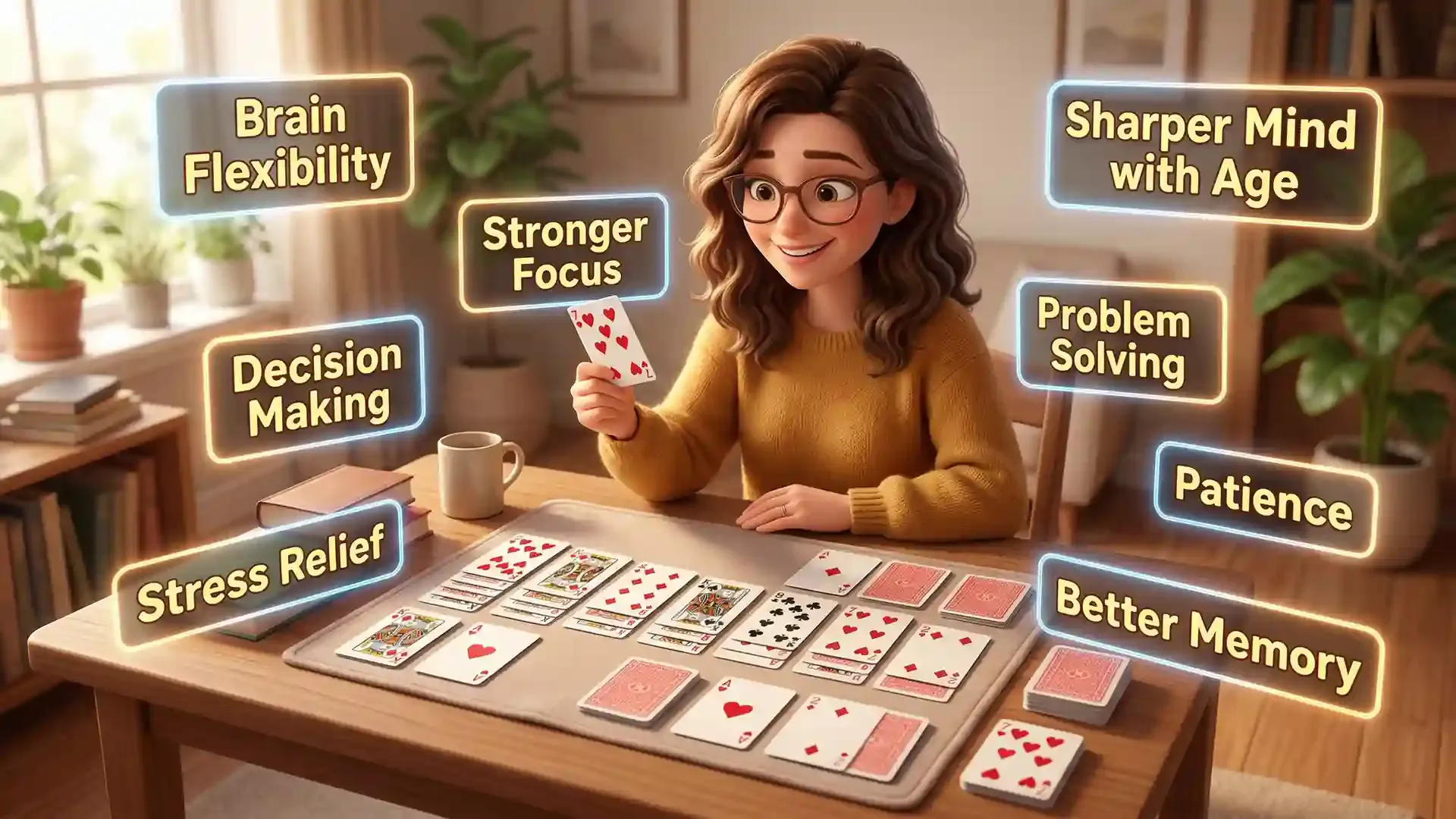
Most of them play solitaire to waste time. However, your mind is busy when you sit and keep flipping cards. Studies have also discovered that card games like solitaire make the mind too busy doing something that matters.
In case you ever found yourself guilty of playing solitaire rather than doing something more constructive, you can spare it; playing solitaire online or offline can be great for your brain, as we are going to prove here.
Table of contents
- What Happens to Your Brain When You Play Solitaire
- 8 Brain Benefits of Playing Solitaire
- Does Solitaire Actually Make You Smarter?
- Is Spider Solitaire Good for Your Brain Too?
- How Does Solitaire Compare to Other Brain Games?
- How Long Should You Play to See a Difference?
- Tips to Get More Out of Every Game
- Conclusion
What Happens to Your Brain When You Play Solitaire

Your brain is kept occupied by every game of solitaire. It involves following directions, strategizing actions, decision-making, and resolving minor issues all the way. Studies have shown that this form of mental activity helps maintain the brain's health with age.
Consider it as a product of mental exercise. You are not overworking, but you are keeping active. And, like light bodily exercise is to idleness, solitaire is much better for your brain than sitting around doing nothing at all. If you want a deeper look, read about the full benefits of solitaire and how regular play supports long-term brain health.
8 Brain Benefits of Playing Solitaire
| Benefit | What It Does for You |
| Better Memory | Helps you remember cards, patterns, and everyday things |
| Stronger Focus | Keeps you present and attentive for longer |
| Problem Solving | Improves how you work through tricky situations |
| Decision Making | Helps you make quicker and smarter choices |
| Brain Flexibility | Keeps your mind active and adaptable |
| Stress Relief | Leaves you feeling calmer after playing |
| Patience | Teaches you to wait for the right moment |
| Sharper Mind with Age | Helps your brain stay healthy as you get older |
1. Improves Memory and Card Recall
Each card you turn over makes a mark in your mind. You may not realize it, but you are forever following up on where that red seven got, or where that may be lying covered in the stockpile. This becomes second nature as mental filing. It is an act that transfers over to real life, and it becomes much easier to remember a name or recall something without having to pull out a notepad.
2. Sharpens Focus and Concentration
Solitaire is very subtle in getting you back into it just when you begin to lose your focus. Even by taking half a moment to break the continuity of the thought-train, you are reasonably sure to miss a move or to miss an easy win. It is a good workout for the brain. For people who feel their attention is growing shorter, a few rounds are a pressure-free way to re-establish the capacity to remain focused.
3. Builds Problem-Solving and Strategic Thinking
Every game is no more than a new solitaire strategy puzzle to be solved. You are not clicking the cards; you are considering the board, weighing your options, and attempting to look three steps ahead. This is the analysis of what you have and the development of the best course of action, and this is the way real-world problems should be solved.
In this case, it must be exercised, and the steps to be followed logically will be part of it when one faces complications elsewhere.
4. Enhances Decision-Making Skills
You are always left wondering this or that in the game. Was it time now to move the king, or was it time to wait until another suit? Should you pull out of the deck or do the layout? There is no action without a consequence. This daily practice will make you faster and more confident in your decision-making, which, in the long run, will make day-to-day choices seem a little less daunting.
5. Supports Neuroplasticity (Brain Rewiring)
The brain stays alert as long as there is something new to chew on. The best way to make it active is to play Solitaire without feeling it is a duty. Playing another version, such as Spider solitaire or FreeCell, is enough to make you read new rules and new patterns. These small, diverse challenges keep your mind flexible and prevent it from getting stuck in the same rut.
6. Reduces Stress and Promotes a Meditative State
Moving cards have a soothing rhythm. When working on a basic, repetitive task, the distractions of a stressful day will become less audible. It is almost meditative to many players, as it is not exhausting but involves enough to occupy the mind and stop worrying. There is some breathing space in the head. Interestingly, many players report this calming effect whether they are playing on a screen or with a physical deck, though the experience differs more than most expect, as the full online vs. physical solitaire comparison reveals.
7. Helps Guard Against Age-Related Cognitive Decline
Solitaire is a game to lose the fastest. Premature movement of a card or emptying the board when the time is not favorable tends to cut the game short. It also educates you silently on the importance of being patient and thinking twice before acting.
The skill of waiting for the opportunity to come and of slowing yourself down helps keep your judgment keen and your mind in check. However, still people ask is solitaire luck or skill game.
8. It Helps Keep Your Brain Sharp as You Age
This is the biggest takeaway. Keep your mind busy, and you will be able to maintain your memory and mental sharpness as you age. Solitaire is so available in creating that habit. None of the partners, no costly equipment, no setup. It is nothing but a bare everyday routine that will keep your wheels turning and your mind busy. The easiest way to start is by downloading the best solitaire app for iPhone or Android and playing just one game a day.
Does Solitaire Actually Make You Smarter?
It will not raise your IQ. However, that is not the question. What solitaire does is to hone the thinking ability that is the most important in life. Regular play improves memory, attention, patience, problem-solving, and decision-making.
When those skills become refined, you think more clearly, cope better in situations, and make fewer mistakes in a hurry. You will see that in your day-to-day life, that may not come out in a test. And there is nothing, arguably, better than that than a score, but you need to remember that there are difficult solitaire games.
Is Spider Solitaire Good for Your Brain Too?
Yes, and in some ways it gives your brain an even bigger workout. Spider uses two full decks; the layout is larger, and the strategy involved is more complex. Your brain has to track more information and plan further ahead than it does in standard Klondike.
That extra difficulty is a good thing. The greater the effort that your brain is forced to put in, the better. When normal solitaire becomes too easy, the next best option is Spider, which has the same soothing format and offers more brain stimulation.
How Does Solitaire Compare to Other Brain Games?
Solitaire holds its own against more well-known brain games. Here is how it stacks up:
| Brain Game | What It Trains | Difficulty | Play Alone? |
| Klondike Solitaire | Memory, focus, planning | Low to Medium | Yes |
| Spider Solitaire | Memory, strategy, thinking ahead | High | Yes |
| FreeCell | Logic, step-by-step planning | Medium to High | Yes |
| Chess | Deep strategy, pattern recognition | Very High | Needs opponent |
| Sudoku | Number logic, concentration | Medium | Yes |
| Crossword | Vocabulary, word recall | Medium | Yes |
The unique feature of solitaire is accessibility. No board, no setup, no cost, no partner. Having the brain benefits of something you can play anywhere in five minutes is impressively good.
How Long Should You Play to See a Difference?
You do not need long sessions. One should spend approximately 15 to 20 minutes daily to make a real impact in the long run. A game or two at lunch or before going to bed is just fine.
What counts is consistency and not time. One hour a day is much better than two hours a week. Make it light, make it normal, and the fruits accrue in the background.
Tips to Get More Out of Every Game

It is okay to play mindlessly, but to reap the actual benefits of the brain, one should try to remain interested. Hold back, be smart, and think before hitting your mouse keys, which is one of the great tips on how to win solitaire game. You should not give up immediately; you need to look through all the possibilities you have when you are stuck.
Switching variants every now and then also helps. Spider, FreeCell, and Pyramid are all a little different in how they challenge your brain, keep it fresh, and give you a more balanced workout overall.
Conclusion
Solitaire is not merely a time-wasting program. All games enhance your memory, sharpen your attention, reduce stress, and support your long-term mental health. There is no need to play for hours or treat it as a serious study. Play frequently, keep it involved, and leave it to it. The positive results are not imaginary, and they do accumulate even more than the vast majority thinks.
FAQs
- Yes, it exercises memory, concentration, decision-making, and problem-solving simultaneously. Research has also linked regular card-playing with improved mental health, particularly as you age. It is among the easiest brain exercises that you can engage in on a daily basis.
- It does. Mental work, such as playing cards, keeps the mind and thinking active as one grows older. Solitaire is also a simple and pleasant way to exercise your brain without making it feel like you are working hard.
- Not according to IQ, but it makes the thinking ability that is the most important in day-to-day life more acute. Memory, concentration, patience, and decision-making are all improved with consistent play, and most people can observe this.
- 15 minutes or so per day is sufficient. Consistency is more important than the length of a session. One long session a week will never do your brain any good in the long run compared to a few games each day.
- Yes, and it can probably be even better as far as a mental exercise. The larger design and additional strategies incorporated require your brain to work more, making it an even better form of exercise to do every day.
- Absolutely. Solitaire is a game that teaches children patience, general strategy, and problem-solving skills. It is an awesome low-pressure method for teaching kids as young as 7 to develop focus and logical thinking skills.
Benefits of Solitaire: Boost Your Mind and Focus Today
Discover the benefits of Solitaire for brain health, focus, memory, and stress relief. Learn how this classic card game sharpens thinking and boosts mental clarity.

Is Every Solitaire Game Winnable? Discover the Truth Today
Uncover the history of Solitaire and trace its evolution from early card traditions to the iconic game enjoyed by millions today.
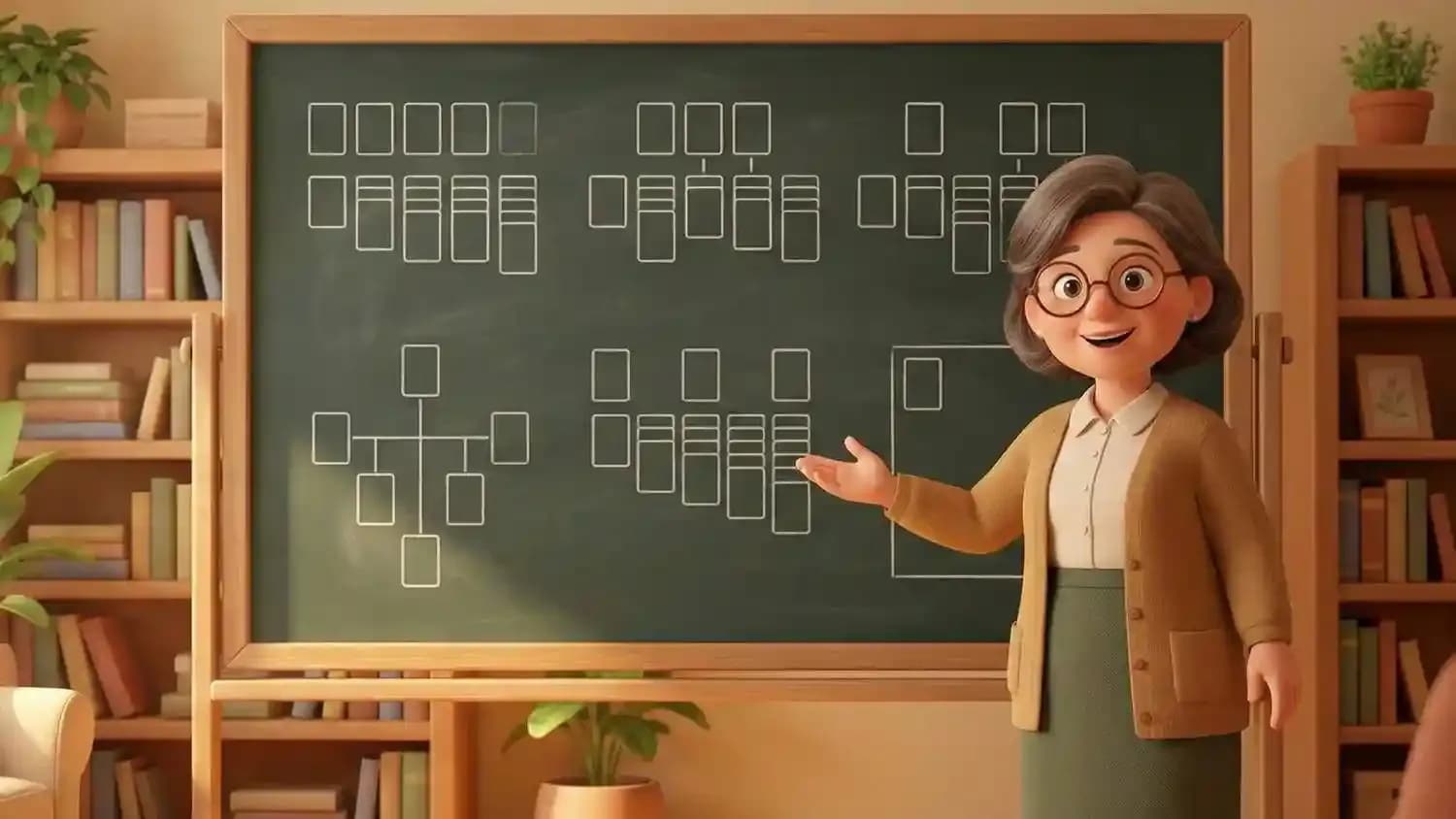
13 Types of Solitaire Games: The Ultimate Guide (With Rules, Variations & Tips)
Explore the different types of Solitaire games including Klondike, Spider, FreeCell, Pyramid, and more. Compare rules and find the version you enjoy most.

Word Hurdle Solitaire Game: Rules Explained
Word Hurdle Solitaire is an exciting card-based game that tests your word-building skills. This guide covers the complete rules, differences from other games, scoring system, and tips for beginners.
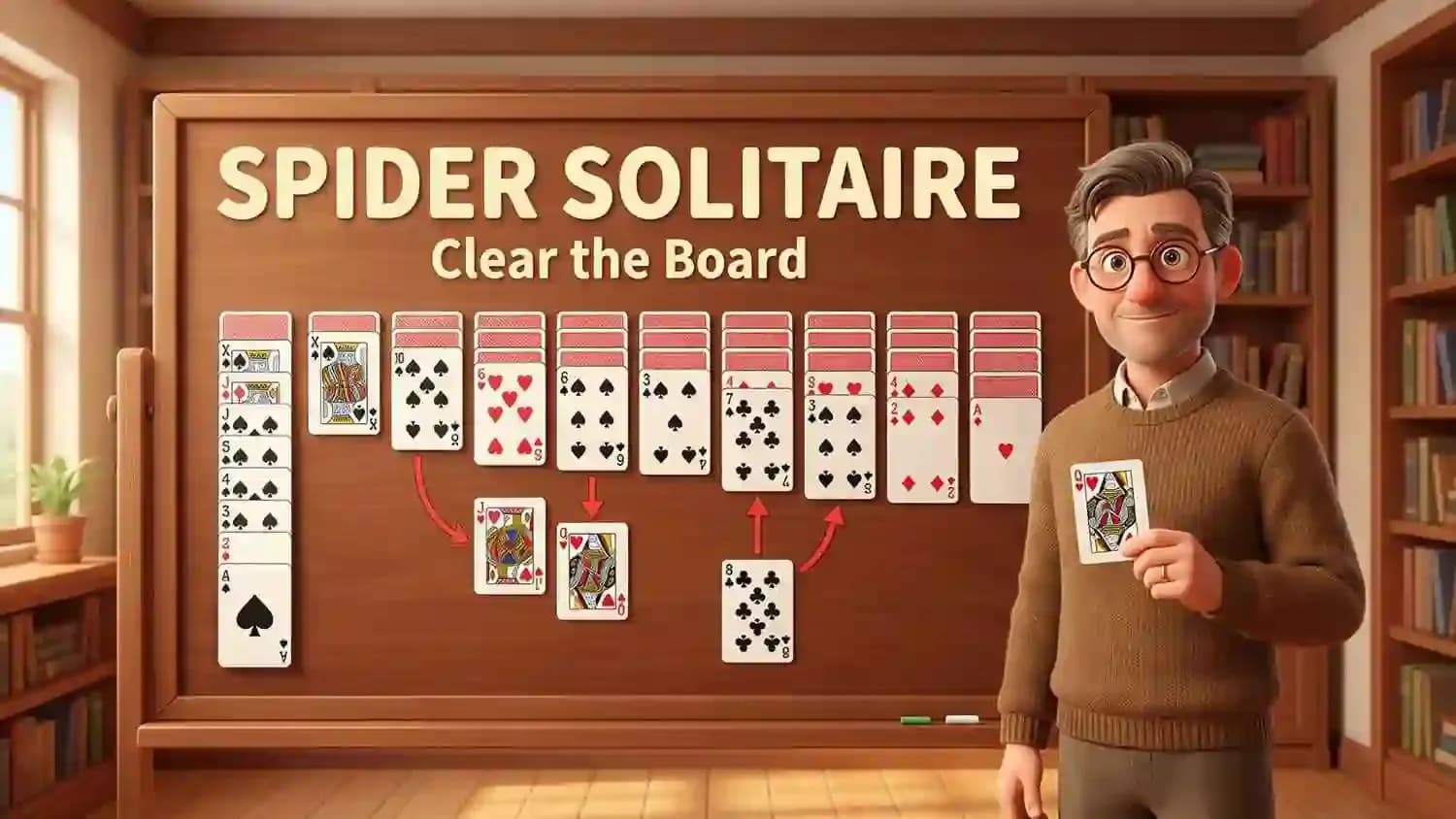
Spider Solitaire Rules: How to Play, Set Up & Win (Complete Guide)
How to play Spider Solitaire made easy—learn the rules, card setup, and proven strategies to improve your skills. Play smarter and win more games now!


