


How to Play Mahjong Solitaire: Rules, Setup and Winning Strategies

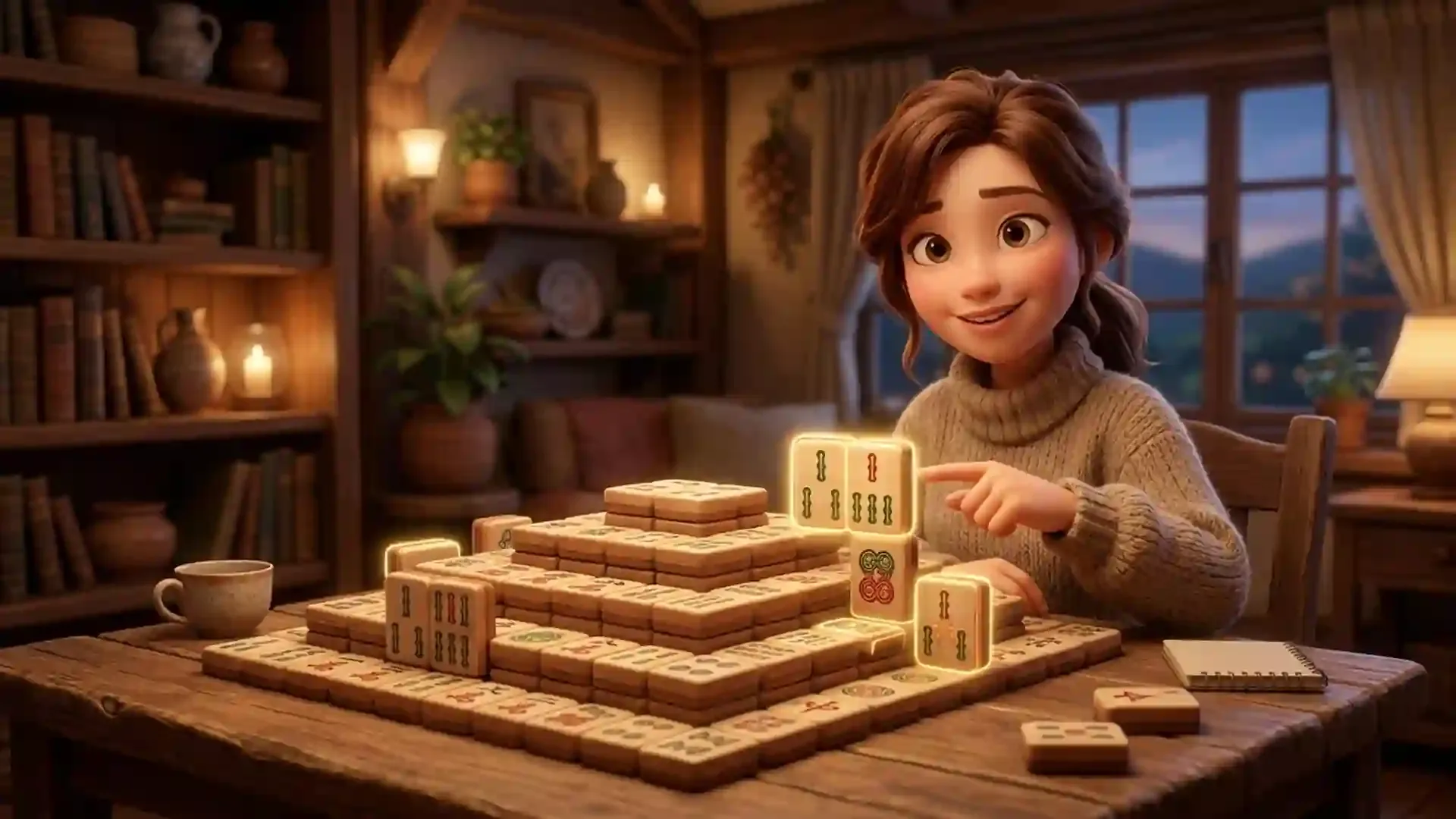
How to play Mahjong Solitaire is something so many people ask, even though, before that, they question whether there is anything called Mahjong Solitaire. Many know either Mahjong or Solitaire, but together they feel it's just a fan-made game, but it's an official game.
Mahjong Solitaire may appear like a difficult game when one looks at it because there are many tiles heaped up in a confusing manner. One cannot see where they came from. But once one learns how to play Mahjong Solitaire, he/she will discover that it is not a complicated game. The key to winning the game is to match them and plan several moves ahead.
It is even more convenient when playing solitaire online, as the digital version handles the intricate tile stacking. It is an excellent means of getting your eyes into focus during a brief refreshment, and once you get into the swing of discovering the latent meanings, it is really difficult to lay aside.
Table of contents
What Is Mahjong Solitaire?
Mahjong Solitaire is a single-player game that revolves around making matches among cards. Although both games have 144 tiles like the Chinese Mahjong game, there seems to be very little else in common.
This game first appeared in the 1980s under the name Shanghai and was introduced for personal computers. You might also hear it referred to as Taipei or Shanghai Solitaire. Understanding the History of Solitaire variants like this shows how a classic concept can evolve into new formats. The goal of the game is to find all the pairs of identical tiles and remove them from the board.
Mahjong Solitaire Setup: How the Board Is Arranged
In a typical game, the 144 tiles are divided into four levels. In digital versions, the number of tiles can be fewer if you select an easier difficulty. When you are ready to start, the game handles the arrangement automatically, which is helpful because navigating different Solitaire Variations requires understanding how each layout affects your move options.
The Tile Categories
Suit Tiles make up the largest set with 108 tiles in total. This set has three categories: Bamboos, Circles, and Characters. There are nine ranks for each category, and each rank has four tiles.
Honor Tiles include Wind tiles (East, West, North, South) and Dragon tiles (Red, Green, White). There are four of each one on the board.
Bonus Tiles are where the rules differ slightly. There are four Season cards and four Flower cards. But here’s the thing: unlike all other cards in the game, these don’t have to be the same. It means you can use any two Seasons together, and any two Flowers together.
Common Board Layouts
Your choice of layout decides how difficult the game will be.
| Layout | Difficulty | Best For |
| Turtle or Spider | Medium | Most players have classic experience |
| Pyramid | Hard | Players who want a real challenge |
| Square | Essay | Beginners learning the game |
Start with Square if it is your first time. Most tiles are easy to reach from the beginning, which lets you focus on learning the rules without getting stuck immediately.
Mahjong Solitaire Rules Explained
The goal is simple. Remove all 144 Mahjong tiles by matching them in pairs. But you cannot pick just any two matching tiles. They both need to meet two specific conditions first.
Core Rules
- Nothing can rest on top of the tile.
- At least one side of the tile, left or right, must be completely open with no tile beside it.
- Both tiles in a pair must be identical.
- When a valid pair is matched, both tiles disappear from the board.
- Removing tiles exposes new ones underneath and beside them.
- The game ends when the board is clear or there are no legal moves left.
Special Matching Rules
Every tile needs an exact match except Bonus tiles. A 5 of Circles only matches another 5 of Circles. A North Wind only matches another North Wind.
But any Season tile matches any other Season tile, and any Flower tile matches any other Flower tile. You do not need the same specific tile, just the same category. Learning these mahjong solitaire rules is essential because this small distinction makes a big difference when your options are running out.
How to Play Mahjong Solitaire: Step by Step
- Step 1: Before making any moves, take a look at the board. Identify the location of all tall columns, long rows, and groups of accessible tiles. This simple advice will save you hours of frustration in future moves.
- Step 2: Find your free tiles. Nothing on top, at least one side open. These are the only tiles available right now.
- Step 3: Make your first match. Tap or click two matching free tiles. They disappear and new tiles around them open up.
- Step 4: Think before every move. Before tapping a pair, check what becomes available as a result. A match that opens three new tiles is always better than one that opens nothing.
- Step 5: Work top down and outside in. Clear tall stacks first. Work long rows from the edges toward the middle. This keeps options open as the board empties out.
- Step 6: Use undo when needed. Most digital versions have an undo button. If a move leads to a dead end, go back and try something different. It is there for a reason.
Mahjong Solitaire Strategy: 7 Tips to Win More Often
1. Start With the Tallest Stacks
High piles hide the most tiles underneath. Clear them early and a big part of the board opens up on its own. Leaving tall stacks too long is the fastest way to get stuck.
2. Work Long Rows From the Outside In
Tiles that happen to be surrounded by other tiles and situated in a long row cannot be accessed until both neighboring tiles are cleared. Always start removing chips at the end of long rows; slowly move towards the center.
3. Do Not Rush Easy Matches
A pair sitting on the bottom layer that is not blocking anything important is worth saving. Easy matches are more valuable later when you need a specific move to unlock something buried deeper in the board.
4. Always Think Two or Three Moves Ahead
Before every match, ask yourself what opens up because of it. If the answer is nothing useful, look for a different pair. One short-sighted move early on can close off options you need much later.
5. Choose the More Useful Pair When You Have Options
When there are several pairs of identical tiles on the board, and you need to choose only one, always opt for the pair that will free the largest number of tiles around it. Applying these types of Solitaire Tips and Tricks helps ensure you maintain board control throughout the session.
6. Clear All Four of the Same Tile When You Can See Them
When all four copies of a tile are visible and free at the same time, match them straight away. Getting them off the board early stops them from blocking each other when space gets tight later.
7. Save Your Shuffles
Most versions give you a limited number of shuffles. Do not use them just because the next move is hard to spot. Take an extra moment to scan everything properly before shuffling. Save them for when you genuinely have zero options left.
Mahjong Solitaire Variants Worth Trying
Once you get used to the regular gameplay, you may want to consider trying different variations. There is a variation where some game systems allow for a Shuffle option that reshuffles all the leftover tiles once you run out of options.
A variation that introduces a timer into the game adds an element of challenge and excitement to your solo game.
There are also variations in which the tile designs are themed instead of using regular icons or numbers. Themed sets have graphics depicting animals, nature scenes, or celebrity faces. These variations do not affect the mechanics of the game.
Conclusion
It can be considered a game that requires patience and analytical skills. However, this game never turns into an obligation. It is necessary to keep track of free tiles, mind the order of moves, and avoid selecting the first pair that seems similar at once.
By planning moves properly, a person will notice that clearing the board happens more often than one can imagine. In any case, after beating a difficult layout, people usually feel an urge to play again immediately. Many find that the Benefits of Playing Solitaire variants like this include a sharper focus and a much-needed mental reset after a long day.
FAQs
- The goal of the game is to clear the board of all the tiles, and the only means of doing so is by creating a combination of similar tiles. One can play a tile only when no other tile is on top of it and when at least one of its sides, left or right, is not in contact with another tile.
- Both of these conditions should be met to see whether a tile can be played. The first is that no other tiles are lying on that tile. The second is that there is no tile on the left or right of that tile. If these two conditions are satisfied, that tile can be played.
- No, not always. In situations with random tile patterns, it is natural that several tiles will overlap, and there will be no way to navigate them. The undo or shuffling feature will help, but there are certain arrangements you can never win, no matter what you do.
- Yes. Start with the square layout of tiles, as there will be many tiles you will be able to play from the beginning. Begin by playing the tallest stack of tiles on your board first. Think carefully about every move you make and be patient. The logic becomes natural quickly and wins follow soon after.

How to Play Spider Solitaire With 4 Suits (Rules & Strategy)
Master how to win 4-suit Spider Solitaire with expert strategies, step-by-step tips, and proven moves. Beat the hardest version — start winning today!
8 Mahjong Strategies to Win the Game Every Time
Master mahjong strategy with simple, effective techniques to clear tiles faster, improve focus, and win more games—start playing smarter today!

Pyramid Solitaire Card Setup: Step-by-Step Guide for Beginners
At first glance, you may think Pyramid Solitaire is a relaxing pastime game with simple rules – just match cards that total 13 and clear the pyramid. Well, you’re wrong because if you’ve played the game, you know that winning is not just about luck. It’s about thinking ahead to ensure you don’t get stuck. That means effective use of the stockpile and recognizing the most strategic plays. So, if you’re new to pyramid solitaire or simply looking to improve your skills, this guide explains to you how to control the game and avoid running out of moves.
Mahjong Solitaire Explained: From Relaxing Pastime to Brain-Teasing Challenge
Mahjong Solitaire is an excellent solo-player game. It is enjoyable and relaxing, but also mentally challenging. Using Mahjong tiles, players are to remove all tiles by matching identical pairs.

How to Win Solitaire: Smart Tips to Increase Your Success Rate
Solitaire can be deceptively simple and easy to start, yet challenging to master. In fact, even experienced players find winning consistently quite challenging. Why? Because it takes more than just knowing the rules. It’s also about choosing the right moves at the right time, although that can be difficult to wrap your head around if it’s your first play solitaire online. Thankfully, this guide outlines the strategic insights that will help you improve at solitaire by thinking ahead and making every move count. So, stick around and become a master.


